Wednesday, March 20, 2013

Fighting the Future via the Past. Pt 4

Third Generation


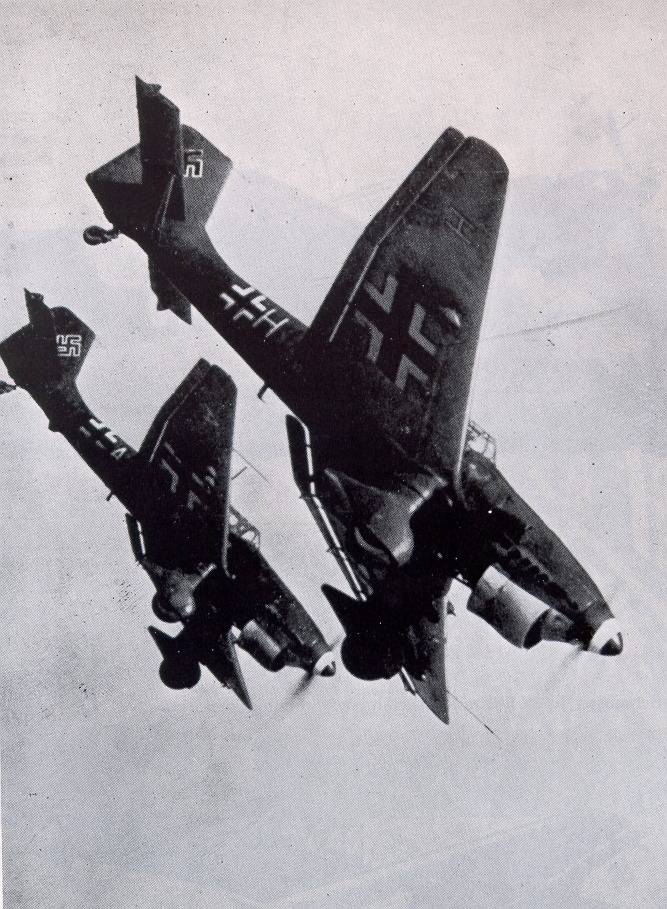
      France and Great Britain's declarations of war against Nazi Germany seemed to be a repeat of the First World War. German discipline would come face to face with French determination and British heroism in a mighty clash that would ultimately result in Germany dashing its forces to pieces against the mighty Maginot Line, a line of fortresses bristling with cannons and machine guns. After all, the lessons of the previous war had taught elan was worthless in the face of the modern arsenal.
      One month and twelve days later, France had fallen, and the British had fled from the continent.

      First seen in the closing months of the First World War, third generation warfare is the opposite idea to second generation warfare. Instead of trying to force order onto a battlefield, commanders seek to create it. Junior officers are encouraged to take the initiative and act on their instincts rather than wait for their distant generals. Tactics now emphasize speed and mobility over firepower.
      Rather than destroying the enemy in pitched battle, third generation tactics aim to break through enemy lines and collapse his position by causing confusion in his rear and among his supply lines. The idea behind this method of fighting is to use clever strategies to overcome a material disadvantage, such as that faced by Germany during both world wars.
      Third generation warfare also differs from second generation warfare in the matter of home involvement. Previous wars had left populations largely intact, but third generation warfare makes a target of civilian populations. This should not be confused with the genocides perpetrated by the axis forces during the Second World War. A more accurate example would be the American and British bombing campaigns, which targeted industrial regions in German and Japan to try and destroy their production capacity.
      Rather than inflicting more casualties than the enemy can afford to replace, third generation strategy (not to be confused with tactics, which refer to plans on the battlefield) tries to destroy the enemy's ability to replace any casualties at all. Population is only targeted for its ability to produce, not for the value of causing more death.
      This manner of thinking will be reversed as we continue on to the fourth and current generation of warfare.

Tuesday, March 19, 2013

Risk

     In 2011, when the world watched in horror the tragedy of the tsunami and earthquake in Japan and the nuclear meltdown that ensued, I thought, "this may be the death of nuclear power as we know it." I knew that the world's opinion of using atomic energy to generate electricity would suddenly become more negative because the inherent risks of nuclear power would be brought to people's immediate attention. But, at the time, it did not have a significant impact on me. I did think that it was a shame that such an efficient method of  creating electricity would be abandoned, but I can't say that I was saddened by the inevitable decrease in popularity of atomic energy. "The risks of a meltdown or other malfunction outweigh the benefits" is what I thought.
     The last few weeks in my international relations class have been centered on an oil unit, where we learn about petroleum's effects on the world's conflicts, economy, diplomatic environment, and physical environment. It was in the first few days of this unit that I realized that all major methods of harvesting energy have risks. The oil trade stirs conflict between nations. It also significantly contributes to global warming, which experts have claimed will cause the death of hundreds of millions, if not billions, over the next few centuries. Making power by burning coal is inexpensive, but it also perpetuates the greenhouse effect at an exponential rate. The risks that come with nuclear power are different than those of carbon-based sources of energy, but they are ultimately equal to those of oil and coal over a long period of time.

Editor's note: I do not mean to marginalize the tragedy of what happened in Japan in 2011. 

Iran's Inevitable Nuclear Power Status

In light of recent events concerning Iran and it's nuclear weapons program, I have decided to dedicate a post to the convoluted question of Iran's quest to join the ranks of the nuclear superpowers.

There is implicit evidence in Iran's actions that proves that is developing a nuclear weapon. For one, Iran has (numerous times, in fact) concealed the fact that it had created facilities for nuclear enrichment. If Iran was constructing these facilities for the "peaceful purposes" for which it claimed, why would it need to conceal them? There is no doubt in my mind that these facilities were meant for the creation of nuclear weaponry. In addition, Iran has been adamant in continuing its nuclear program despite numerous sanctions being imposed, and threats of military action. If Iran had innocent intentions, it would have stopped its program then and there, and subject itself to inspections by the International Atomic Energy Agency.

In my humble opinion, the question is not whether Iran will create nuclear weapons, it is when it will create them. Even though the sanctions are cutting into Iran's economy and wounding the oil industry, Iran shows no plans of backing down. This has multiple factors: Iranian pride, which would be shattered if the government bowed its head to the West and shut down its nuclear program ; the mammoth loss of rare resources, time, and equipment that it had already invested; the lack of any leverage that the general populace has on the continuation of the nuclear program due to the theocratic, nondemocratic government; and the idea that Iran had already known that it was going to receive these sanctions, and was ready to make sacrifices in order to reach its goal.

Both America and Iran both have done horrible things to each other. Neither can claim the higher moral ground, and say that they are right and the other is wrong. I believe the first step in creating a brighter tomorrow is for the two countries to formally apologize for past events, and most importantly create better communication between the two. The lack of understanding and trust between Iran and America will only lead to clashes in the future; in the globalized world of today, we can only hope that they can make up before it is too late.

Thursday, March 14, 2013

The Iranian Nuclear Crisis

     Tonight was one of the best speaker sessions that I have attended since I have taken part in World Affairs Council events. It was titled, "The Iranian Nuclear Crisis: A Roundtable Discussion" and was based on Iran's nuclear program and its involvement in international politics. It gave me a better, broader perspective on the issues regarding the arguably most volatile state in the Middle East.
     The panel of experts began by building the background of the issue. Evidently, President Obama was on an Israeli radio station recently, saying that at the rate of which it is currently developing its nuclear capability, Iran is a year away from having a nuclear weapon. Next, the moderator brought up the P5+1 and its discussions with Iran. The P5+1, I learned, is the five permanent members of the United Nations Security Council plus Germany and the principal organization in discussing international politics with the Iranian government. This led to the topic of Iran's economy, which has seen a great deal of sporadic changes and instability over the past few years. Also, over the last seven years, Iran's government has collected sixty percent of the nation's oil revenue, which is absolutely colossal compared to other oil-producing countries. 
     Subsequently, the moderator asked the panel the ultimate question about this issue, "How can the issue of the Iranian nuclear crisis be solved practically while guaranteeing the safety of other nations?"                 Inevitably, the state of Israel was mentioned and a discussion about its position toward Iran's nuclear program ensued. Apparently, many members of Israel's government oppose using military force in an effort to discontinue the nuclear program. Citing the counterproductive 1981 Israeli attack on Iraq to halt their nuclear development, many believe that military action against a nation's nuclear program can act as a catalyst, speeding up the process of research and development.
     Most countries are obviously reluctant to allow the Iranian nuclear program to continue. At a conference, Vice President Biden declared, “Let me make clear what that commitment is: It is to prevent Iran from acquiring a nuclear weapon, period. Period. End of discussion. Period. Prevent — not contain — prevent.” The experts tackled a serious barrier that prevents us from being able to reasonably communicate with Iran: the fact that the United States, as well as the P5+1 for that matter, does not treat Iran as a sovereign state. A member of the Reagan administration pointed out that the United States needs to stop its policy of talking with Iran's leadership only when Iran complies with U.S. regulations and requests. This prevents many conversations that could potentially lead to agreements between Iran, its neighbors, the United States, and Europe. He also acknowledged that there is a high possibility that Iran does not want to develop a nuclear weapon to use offensively, but rather to use as a shield and a deterrent of attacks from Israel and Saudi Arabia.
     Additionally, the panel dismissed the commonly accepted idea that North Korea and Iran are working very closely to collaboratively develop nuclear weapon technology, despite the fact that Iranian scientists have likely observed North Korean missile tests. 
     

Wednesday, March 13, 2013

Half-Breed


My first encounters with others can often be described as humorous, yet puzzling.  After the smiles and my usual, “Hi, how are you?” my new acquaintance’s speculation process immediately begins.  It starts with my brown hair, my large, round eyes, and finally the curiously long surname on my notebook.  Then, after careful deliberation and an awkward silence, the observer finally asks the standard, “Wait, so what are you?” 
Annoyed, but prepared, my only response is, “Hmm… what do you think?”
With answers varying from French, to Filipino, to Mexican-Japanese mix, my seemingly unknown ethnicity has become a trademark I have gained throughout a majority of the duration of my high school career.  My facial features and hyphenated British and Taiwanese surname define me as a typical Eurasian.  However, the pervasive culture of my school says otherwise - especially when my race characterizes me as an outcast of the Asian “model minority.”
I usually ignore random bits of criticism thrown at me, whether it is about my “white people” style of dress or my lack of knowledge in the Asian cultural sphere.  However, this question that chronically seems to ask “Which planet do you hail from?” puzzles me.  I have dealt with small instances involving my race in the past, but I still have yet to understand why people in my neighborhood find “half-breeds” to be the newest anomalies.
Confused.  Lost.  Awkward - All three describe how I felt during my first two years of high school.  I first attempted to assimilate into my school’s culture by becoming depressed over ninety percent scores on tests and by laughing at racist jokes against Caucasians.  Yet, once the jokes impacted my own races on a larger scale, I finally began to wonder why one’s ethnicity plays such a large role in the characterization of another.
When we were kindergartners, nobody cared about who is Middle Eastern, Mexican, or Asian.  Yet, the innocence that we once had throughout elementary school slowly deteriorated as we all developed with an expanded pool of knowledge - one that includes racism.  Thus, with things such as terrorist organizations, Mexican immigration, and “Asian invasion” simmering into the minds of the world today, many sadly choose to characterize people by their race, instead of their overall personalities. 
With this realization, I felt guilty not just because I judged many by their race, but also because I lost my former beliefs in order to fit in with my school’s bizarre culture.  Yet, this guilt soon turned into a desire to change as I decided to stop competing against my classmates through quantitative means, learn how to actually enjoy my classes with genuine curiosity, and put more effort into understanding the various aspects and disparities between my own two cultures. 
With this new perspective, I learned “half-breeds” could learn Mandarin just as easily “full Chinese” students, conducted more research on my European roots, and eventually traveled to Taiwan alone and found the components of my lost culture that I was looking for.  Through the criticism I experienced due to my strange ethnicity, I was finally able to appreciate my mixed backgrounds through a new lens, and was also able to prove to my classmates that people not of Asian heritage could be successful in the academic world, as well.
Thus, whether I am from Indonesia or Mars, I now know how to assume both my Taiwanese and European backgrounds, and how to accept my true identity as a young Eurasian.  While many people I meet are still surprised by my Caucasian background and question my academic ability today, the main difference is that I now know to ask, “Wait, what difference does it make?"

I often think of "half-breed" as a way to describe animals rather than people of mixed ethnicities. 

Competition


     In the United States, our culture fosters the expectation that growth, economic and otherwise, is constant. In the past twenty or thirty years, however, we have seen less innovation than during any other period of time in the last century. What is the common denominator? What is different now?
     Last Friday, I was listening to Fareed Zakaria give a speech about the infinitely repeating cycle of rise, peak, decline, crisis in civilizations and how it relates to actual threats to our society and economy. What struck me was how he identified that one of the greatest issues that our nation currently faces is the lack of international competition. He stated that competition is the principal force that drives the growth of a nation. Without it, we have little incentive to change and innovate. This is when I realized that the Cold War may have been the best thing that happened to the United States in the past sixty years.
     Like most people, when I thought about the Cold War, the first things that came to mind were the widespread paranoia of nuclear proliferation and the wonderfully cheesy black-and-white anti-communist propaganda videos.
     What I found is more important is the innovation that was spurred by our competition with the Soviet Union. The end of the Second World War was the starting block for a race between nations that was to last over forty years. The two nations were in fierce competition. The fear of potential confrontation fueled rapid positive changes in nearly all aspects of American society and government.
     The Marshall Plan of 1948 was a massive change in US diplomacy. The funding of the reconstruction of crumbled European countries was intended to prevent Europeans from falling into poverty and turning to communism. This brilliant foreign aid packaged accomplished the stabilization of democracies throughout Western Europe and the growth of the global economy by providing a solid foundation for various markets.
     The Soviets' successful launch of Sputnik was a shock to the American people. It gave the United States a major incentive to fund improvements in math, science, and physical education. The satellite also motivated the federal government to create the National Aeronautics and Space Administration, which was to subsequently launch successful missions to the Moon.
     Communist uprisings around the world pushed the government to rethink its military strategies, focusing more on small-scale operations and less on more traditional large battles.
     Without competition, our nation will maintain a slow rate of innovation and creativity. It is safe to say that, without the Cold War, the United States would be much worse off.

Monday, March 11, 2013

Fighting the Future via the Past. Pt 3

Second Generation


      In the 18th century, a mass of men standing in lines exchanging musket fire was an acceptable way to fight wars because the weapons of the time were inaccurate and slow to reload.
      In the 19th century, a mass of men standing in lines exchanging rifle fire was a costly way to fight wars because the weapons of the time were accurate and deadly.
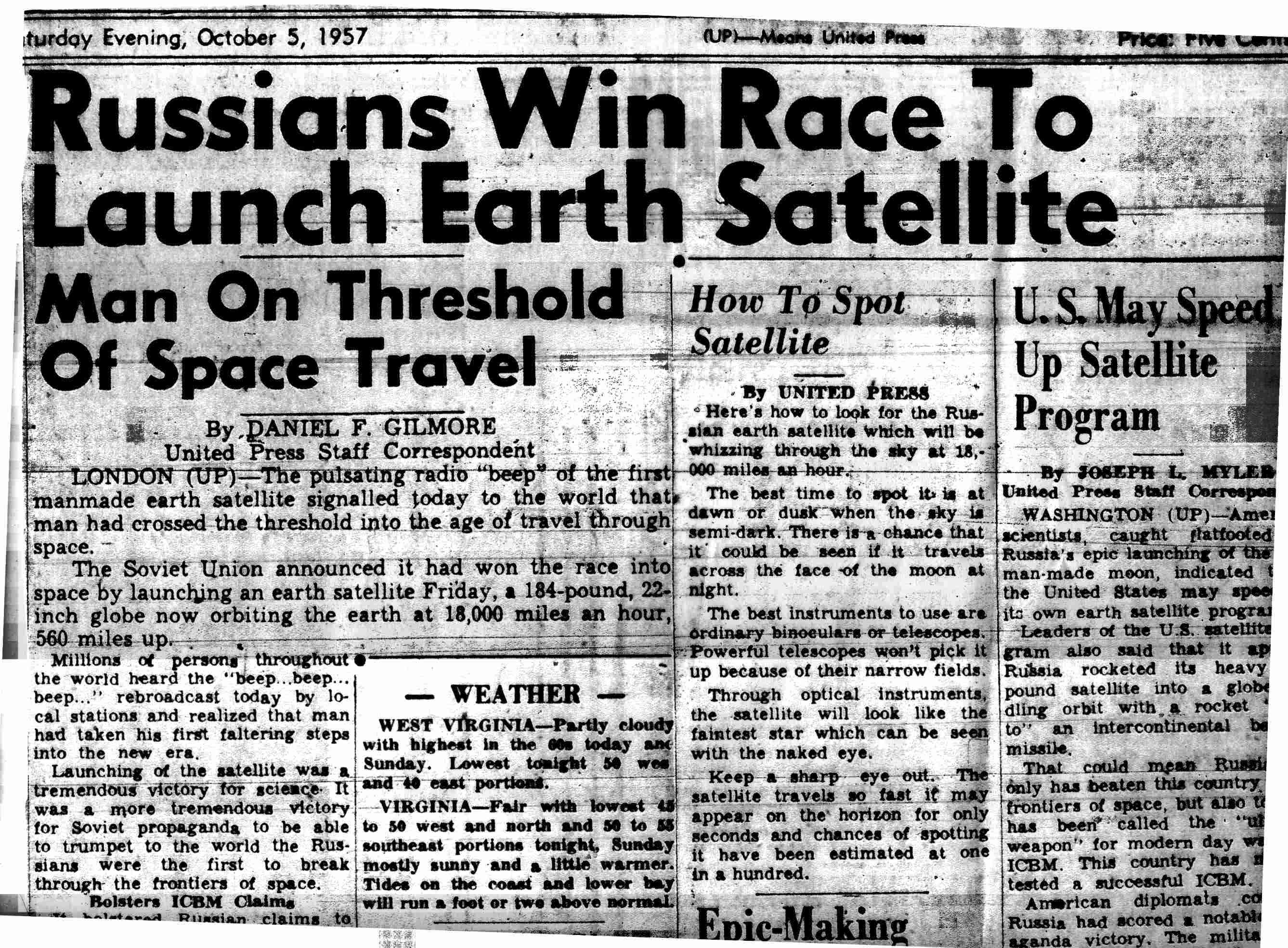
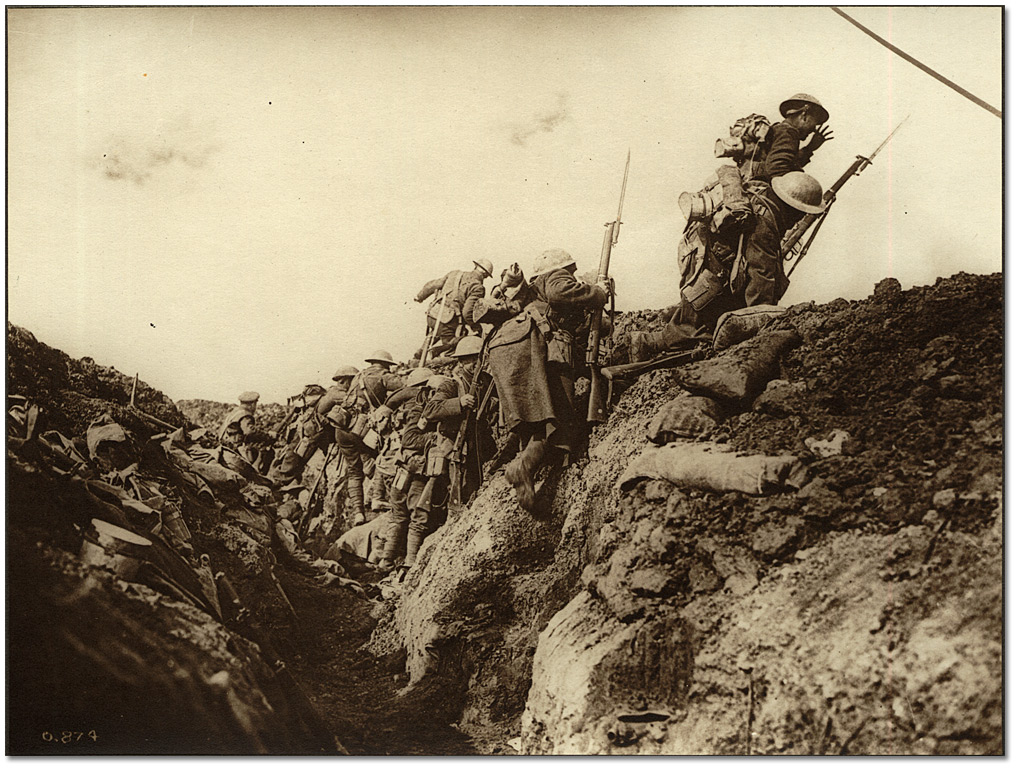
      At the start of the 20th century, ostensibly with the invention of the machine gun, men in the open were men already dead. No amount of courage or elan, the French word for the will to win, was sufficient to overcome explosive artillery shells raining down metal shards or guns that could fire five hundred rounds a minute.

      The massed manpower of the previous generation of warfare no longer mattered in the face of such devastating destruction. But the commanders and theoreticians of the mid 1800s and early 1900s were still the products of the previous age of warfare. Instead of massed manpower, the focus shifted to that of massed firepower. Strategy became based around the idea that by inflicting more material losses to the enemy then one received, the enemy would be forced to surrender. 
      While the previous generation introduced order to the battlefield, the changing technologies created a more disordered battlefield. This method of war developed in response to the chaos as commanders tried to create order with controlled command systems and artillery when order with men became suicidal. Generals could no longer order their men to stand in lines, but they could still have cannons fire on schedule and attacks take place on time. 
      With this idea came the idea of a material war. A minor and oft-undiscussed factor is the change in banking practices that allowed nations to finance war past the limits of hard bullion. Now wars were measured in the amount of men and materiel that a nation could put on a field and so was victory. This does not mean that wars were fought with the sole idea that one could bleed the enemy dry, but in the stalemate of World War 1, it was one of the proposed solutions.
      But in order to persecute this kind of war, the nation and the military had to be one, and if not, at least closely related. A war costs untold amounts of men, materiel, and most importantly, money, all of which needed to be drawn from the country and its populace. One such effect was widespread propaganda that prepared the population for the sacrificed needed to sustain a war of any length.
      The gradual melding of the battlefront with the home will be taken to new lengths with the responses to the developments of the second generation of war, but it has already started with the first taste of the industrialized battlefield. No longer can the family sit home and receive letters while Johnny goes to war, now mother must work in the munitions factory, father must build trucks, and sister Jenny must make uniforms.