Showing posts with label opinion. Show all posts

Friday, May 24, 2013

Globalization and the American Worker

These past few weeks have been long. I am finally wrapping up my high school career and moving on to bigger and better things. It has been a while since my last post, but now I'm back.

      Those who know me understand that I am a strong advocate of foreign aid and other forms of United States international affairs, or at least I hope that they do. I believe that this nation's superpower status deeply relies on its relationships with other nations, both industrialized and developing. Trade between the USA and its economic partners is imperative to maintain the global economy. In no way do I believe that the United States of America should isolate itself. But I have one concession to make.
     In the 1980s, American manufacturing firms began moving a great deal of their labor from their home to poor, developing nations in East Asia and South America. They claimed, accurately, that products manufactured by this cheaper labor would bring a higher profit margin and help United States corporations sell their products for a lower cost. The public understandably welcomed this change. After all, they would be paying less for just about everything they could buy.
     The true cost of this change, however, was considerably higher than people believed. It was also dangerously invisible. Companies saw their bottom lines remain stagnant while others were seeing huge increases since exploiting cheap labor in China, Bangladesh, and India. They inevitably panicked. They laid off workers and shut down factories that in some cases had been in operation for over a century (see Levi's). Working men and women were left out in the cold. Too many factory workers struggled to support their families. Their kids went hungry. The government was not untouched. Unemployed factory workers were not able to pay taxes. Instead, they needed to borrow from their countrymen to sustain themselves, putting them to shame. Schools were closed and essential services such as police and fire were cut back because of the newfound (and currently remaining) budget deficits.
     There has also been a more subtle detractor to outsourcing. American corporations such as Boeing and General Electric that spend a great deal of capital on research and development have moved much of their manufacturing to nations that have very little regard for intellectual property. The rate of reverse engineering of Boeing's 787 Dreamliner wings, GE's jet engine parts, and other high technology products is quite high, proving that outsourcing is not only detrimental to the United States, but is also a poor business decision.
     Factories and the workers that operated them have effectively made the United States an industrial and economic giant. Since the colonists first landed at Jamestown, the integrity of this great nation was built upon the promise of the American worker. Businesses that put money ahead of morality in conjunction with free trade are unraveling the fabric that has maintained the industrial power of the United States.
     In order to clarify my purpose, I will concede that I am relatively conservative. I believe in capitalism and the free market. I understand the importance of the private sector in the United States and appreciate its efficiency and dedication to performance. However, in my eyes, the American worker should always come first. In my eyes, the conservative state of mind revolves around the idea of the value of the individual. Betraying American workers by replacing them with the foreign working poor does not respect the value of the individual.
     The modern world is a global one, and I truly believe that this nation is committed to making the world a better place. In order for the United States to remain strong and capable of providing foreign aid, its people need to realize the true cost of outsourcing and understand the value of the American worker.

Sunday, April 28, 2013

So... I Bought a Llama


   Yes, I actually bought a llama.
   While going through my family’s daily dose of L.L. Bean, J. Crew and Pottery Barn catalogs during last year’s holiday season, I found a smaller catalog, with a sheep on the cover that immediately caught my attention.  Upon seeing the Heifer International logo on the bottom of the cover, I began to recall the church announcements I often heard around the holiday season, regarding Heifer International and how you can literally buy a cow for somebody in another country for only a small sum of money.  Curious, I flipped through the catalog to see what the options were, and finally saw a llama – a gift surprisingly fun and affordable, with its price of $150.
   Based in Little Rock, Arkansas, Heifer International is a global nonprofit organization that works to eradicate hunger and poverty worldwide.  As a way to meet the needs of families and individuals in over the forty countries impacted so far, Heifer International offers a wide variety of donation options, ranging from sending a girl to school, to starting a business, to buying goats.  In operation since 1944, Heifer International has helped over 18 million families around the globe restart their lives, and build a sense of hope within each of the communities affected.
While I still have yet to watch the movie,
I have heard it is just as intellectually fulfilling
and eye-opening as the book.
   As I was reading Nicholas Kristof and Sheryl WuDunn’s novel, Half the Sky: Turning Oppression into Opportunity for Women Worldwide, at the time, I was inspired by the novel’s stories of the attempts women made to recreate lives for themselves in their oppressed circumstances.  Thus, I decided to take advantage of the opportunity Heifer International offered, and began to save up for my llama as my paychecks began to come in.
   I will admit that I was skeptical of Heifer International, at first, and felt uneasy as I began to save up my money.  Yet, after doing my research, I was able to find Heifer International mentioned in not only the foreign aid packets I received in my International Relations class, but also in smaller online newspapers, and the New York Times, with an article written by Kristof, himself!  With this reassurance, I gradually saved up all of my money, and finally made my purchase last December, in hopes that the recipient family would receive their llama before the New Year.
   While I sometimes wonder how the recipient family's llama is doing, wherever it is in the world, it still feels incredible to know that I was able to invest my money in something worthwhile.  Thus, if you’re ever feeling generous, or are just curious about Heifer International and its donation options, I highly recommend looking on Heifer International’s website.  Who knows, maybe you will want to buy something, too!
     Heifer International also allows you to make donations under somebody else’s name.  I know several people that have bought each other various animals for each other’s birthdays and holiday gifts, and they have all been very happy with their purchases.

Friday, March 29, 2013

Education

     I know that I touched on education in my first blog post, but I feel that it is too widespread and too significant to limit such a topic to a brief mention in an article.
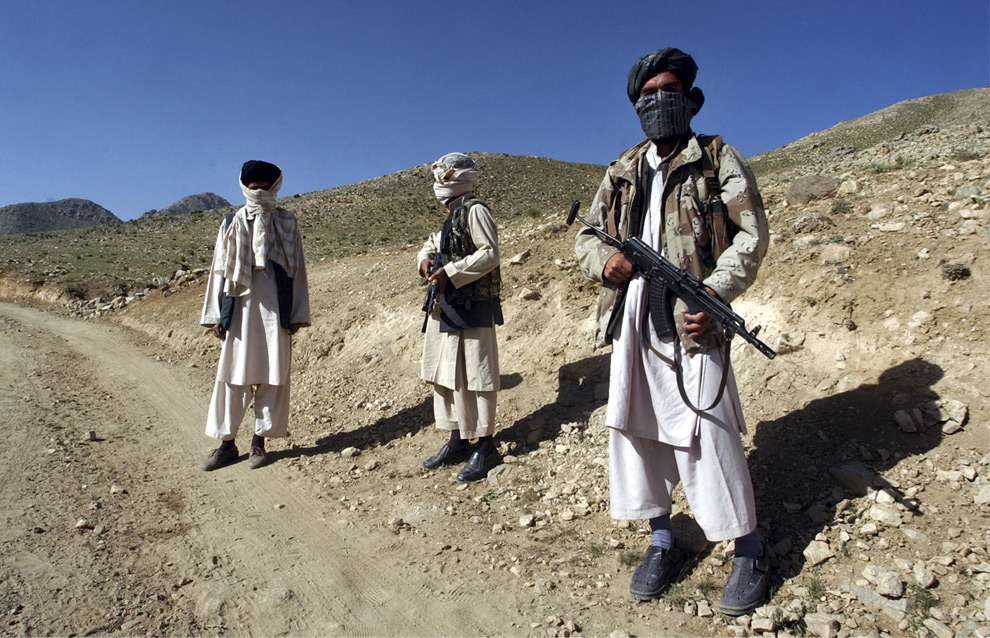
     When I think about democracy as a whole, its successes and failures, how it could work better in some places and how U.S. policy could be different regarding the construction of new democratic governments, I notice a common thread. It seems as if every democratic government relies on the intellectual capacity of its people to survive as an institution that is truly controlled by its citizens. Since the United States has occupied Afghanistan, it has tried to establish a system where the Afghan population is involved in creating laws and representing themselves in the government. Unfortunately, Afghanistan's weak educational system has prevented the growth of a democracy similar to the United States and most European nations. It still excludes girls for the most part and much of the population remains illiterate. Afghanistan has established itself as a poor environment for democracy, solely because of its methods of educating its people, or lack thereof.
     What I feel is ironic is that the United States tries to impress democratic ideals upon nations such as Afghanistan, but Congress considers massive cuts to education quite frequently. What politicians from both parties need to realize is that education is the root of democracy. A more educated voting public insures that elected officials will be more qualified and less corrupt. It also has other perks, such as a stronger economy and better relations with foreign nations.
     Education is a long-term investment. This is why people are reluctant to allocate valuable capital to it. They worry that they will not see their returns in a timely manner. They see it as a leap of faith. But the truth is that money that is spent on schools rarely lacks returns. In the Cold War, the United States responded to the threat of an impending nuclear war and the spread of communism by strengthening the methods by which its children were taught. Math and science education reached a monumental high in the 1960s, as well as physical fitness education. Because of this, the United States was innovating at a rate higher than ever before for nearly two decades and its students were performing better than those of every other nation.
     I hope that it will not take another threat of nuclear proliferation to make leaders from both American political parties decide to invest in its people's intellectual capacity. It seems as if every day, people rant about how this country is going in the wrong direction and how they have little say in the government. Hypocritically, these same people refuse to vote on parcel taxes and other measures that have the potential to supplement schools with much needed funds to improve their pupils' learning.
     A solid education is the source of the commodity that is knowledge. Investing time, money, and political capital in education can provide better futures to United States citizens. It strengthens the government, involving more great minds in the creation legislature and providing innovative ideas to governments, from a municipal to a federal level, improving the U.S. as a whole.
  

Wednesday, March 27, 2013

Fighting the Future via the Past. Pt 5

Fourth Generation


      As technology far outstrips the abilities of a human, people, not necessarily commanders, realized that fighting a war against a modern military is tantamount to suicide, even more so than before, and suicide is only a strategy for inspiration. Nobody won a war by dying better than the other side.
      The fourth generation of warfare is a reaction, not necessarily to any previous generation of warfare, but to the technologies and power stemming from previous military and political developments. This style of warfare is the strictest interpretation of the expression "Warfare is a continuation of politics by other means." Instead of trying to even fight, fourth generation leaders use force to promote their goal.
      It is the ultimate merging of the military and the civilian sectors because no target is above consideration. Often, the ultimate goal is to persuade a greater power that, whatever their goal is, it is much too expensive given the economic, time, and human costs. Among the weapons available are terror, propaganda, secrecy, and if all else fails, force.
      However, fourth generation warfare is not just seen in these irregular groups. It can also be used by large countries wanting to avoid war.
      Here, I mean cyberwarfare. By avoiding costly and destructive war, large countries can retain their infrastructure while striking at each other. This is the warning of my entire column, that warfare is no longer measured in tanks, ships, and men. All of the previous eras of war have definitively shifted with a bang, but the beginnings can be seen years earlier.
      In this case, the cyberattacks flying between countries is the herald of the times to come. By the time the world wakes up to the era-changing bang, somebody will be on their knees, infrastructure crippled and economy drained.

      For the sake America's future, don't let that be us.

Wednesday, March 13, 2013

Half-Breed


My first encounters with others can often be described as humorous, yet puzzling.  After the smiles and my usual, “Hi, how are you?” my new acquaintance’s speculation process immediately begins.  It starts with my brown hair, my large, round eyes, and finally the curiously long surname on my notebook.  Then, after careful deliberation and an awkward silence, the observer finally asks the standard, “Wait, so what are you?” 
Annoyed, but prepared, my only response is, “Hmm… what do you think?”
With answers varying from French, to Filipino, to Mexican-Japanese mix, my seemingly unknown ethnicity has become a trademark I have gained throughout a majority of the duration of my high school career.  My facial features and hyphenated British and Taiwanese surname define me as a typical Eurasian.  However, the pervasive culture of my school says otherwise - especially when my race characterizes me as an outcast of the Asian “model minority.”
I usually ignore random bits of criticism thrown at me, whether it is about my “white people” style of dress or my lack of knowledge in the Asian cultural sphere.  However, this question that chronically seems to ask “Which planet do you hail from?” puzzles me.  I have dealt with small instances involving my race in the past, but I still have yet to understand why people in my neighborhood find “half-breeds” to be the newest anomalies.
Confused.  Lost.  Awkward - All three describe how I felt during my first two years of high school.  I first attempted to assimilate into my school’s culture by becoming depressed over ninety percent scores on tests and by laughing at racist jokes against Caucasians.  Yet, once the jokes impacted my own races on a larger scale, I finally began to wonder why one’s ethnicity plays such a large role in the characterization of another.
When we were kindergartners, nobody cared about who is Middle Eastern, Mexican, or Asian.  Yet, the innocence that we once had throughout elementary school slowly deteriorated as we all developed with an expanded pool of knowledge - one that includes racism.  Thus, with things such as terrorist organizations, Mexican immigration, and “Asian invasion” simmering into the minds of the world today, many sadly choose to characterize people by their race, instead of their overall personalities. 
With this realization, I felt guilty not just because I judged many by their race, but also because I lost my former beliefs in order to fit in with my school’s bizarre culture.  Yet, this guilt soon turned into a desire to change as I decided to stop competing against my classmates through quantitative means, learn how to actually enjoy my classes with genuine curiosity, and put more effort into understanding the various aspects and disparities between my own two cultures. 
With this new perspective, I learned “half-breeds” could learn Mandarin just as easily “full Chinese” students, conducted more research on my European roots, and eventually traveled to Taiwan alone and found the components of my lost culture that I was looking for.  Through the criticism I experienced due to my strange ethnicity, I was finally able to appreciate my mixed backgrounds through a new lens, and was also able to prove to my classmates that people not of Asian heritage could be successful in the academic world, as well.
Thus, whether I am from Indonesia or Mars, I now know how to assume both my Taiwanese and European backgrounds, and how to accept my true identity as a young Eurasian.  While many people I meet are still surprised by my Caucasian background and question my academic ability today, the main difference is that I now know to ask, “Wait, what difference does it make?"

I often think of "half-breed" as a way to describe animals rather than people of mixed ethnicities. 

Competition


     In the United States, our culture fosters the expectation that growth, economic and otherwise, is constant. In the past twenty or thirty years, however, we have seen less innovation than during any other period of time in the last century. What is the common denominator? What is different now?
     Last Friday, I was listening to Fareed Zakaria give a speech about the infinitely repeating cycle of rise, peak, decline, crisis in civilizations and how it relates to actual threats to our society and economy. What struck me was how he identified that one of the greatest issues that our nation currently faces is the lack of international competition. He stated that competition is the principal force that drives the growth of a nation. Without it, we have little incentive to change and innovate. This is when I realized that the Cold War may have been the best thing that happened to the United States in the past sixty years.
     Like most people, when I thought about the Cold War, the first things that came to mind were the widespread paranoia of nuclear proliferation and the wonderfully cheesy black-and-white anti-communist propaganda videos.
     What I found is more important is the innovation that was spurred by our competition with the Soviet Union. The end of the Second World War was the starting block for a race between nations that was to last over forty years. The two nations were in fierce competition. The fear of potential confrontation fueled rapid positive changes in nearly all aspects of American society and government.
     The Marshall Plan of 1948 was a massive change in US diplomacy. The funding of the reconstruction of crumbled European countries was intended to prevent Europeans from falling into poverty and turning to communism. This brilliant foreign aid packaged accomplished the stabilization of democracies throughout Western Europe and the growth of the global economy by providing a solid foundation for various markets.
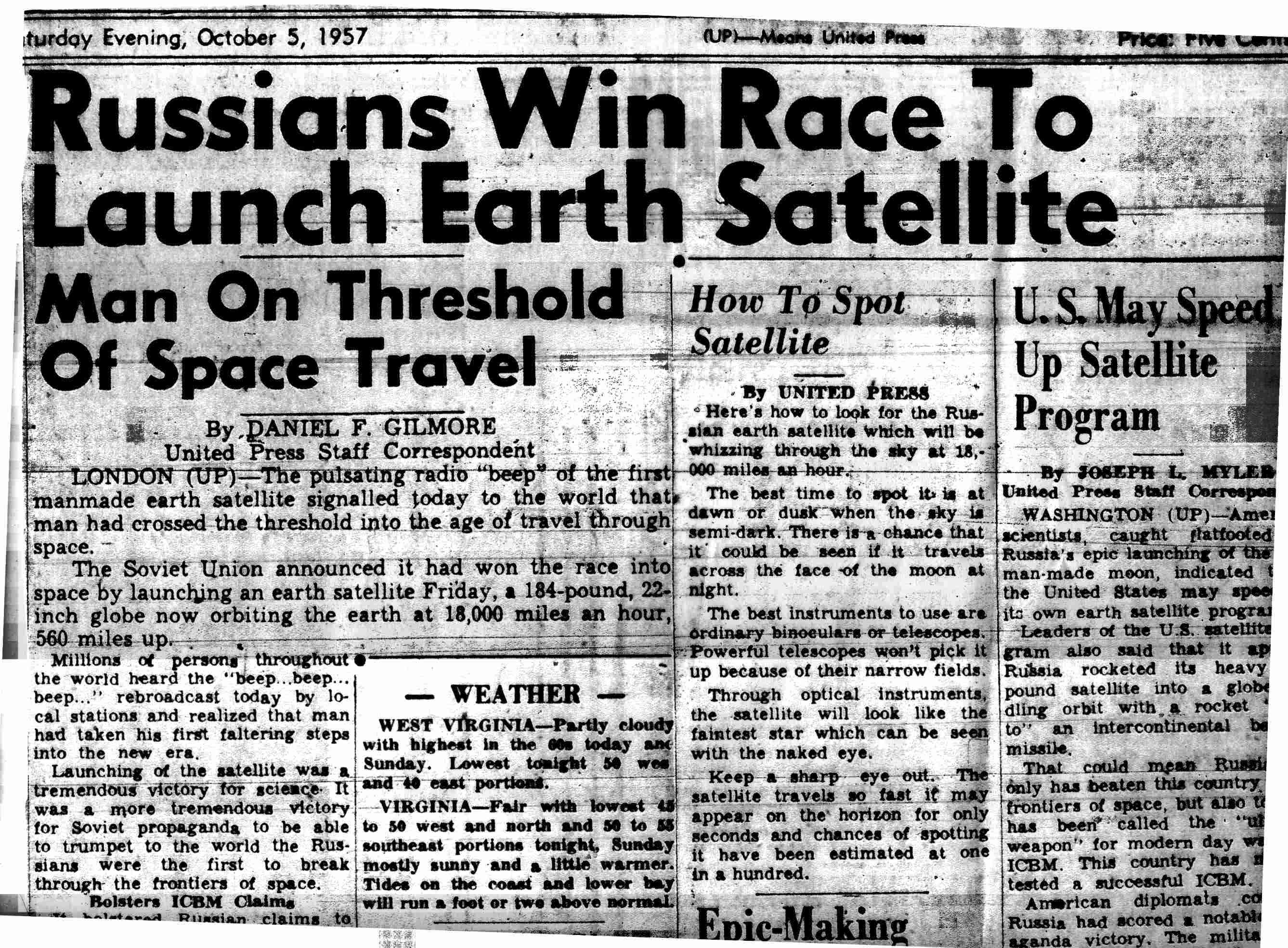
     The Soviets' successful launch of Sputnik was a shock to the American people. It gave the United States a major incentive to fund improvements in math, science, and physical education. The satellite also motivated the federal government to create the National Aeronautics and Space Administration, which was to subsequently launch successful missions to the Moon.
     Communist uprisings around the world pushed the government to rethink its military strategies, focusing more on small-scale operations and less on more traditional large battles.
     Without competition, our nation will maintain a slow rate of innovation and creativity. It is safe to say that, without the Cold War, the United States would be much worse off.

Saturday, March 9, 2013

Climate Change: Adapting to the Inevitable

http://www.gillespiehouseinn.com/images/CareEnvironmentLogo-Large.jpg

     It’s all in our heads.

     That was an essential point that John Steinbruner, Amy Luers, Susanne Moser, and Kenneth M. Chomitz floated into the diffusive cloud of our collective consciousness regarding climate change. We have the technological capabilities, but we’re not doing much. We concern ourselves with specific costs that entail mitigation programs when it’s “not meaningful” to do so, as Dr. Chomitz said. So where does the true issue lie?

     Perhaps the roots of our problems are tangled within our culture of not taking effective action until we meet the dire consequences face to face. Mark Hertsgaard, the moderator of the “Climate Change: Adapting to the Inevitable”  discussion, raised an intriguing question about why parents, having faced the feat of guarding their children from World War II and terrorist attacks in previous decades, are not as quick to prepare for the increasingly immense scale at which environmental damage is affecting us. The effects of climate change are threatening us from all angles, and yet we fail to mobilize.

     I agree that we as a people need to shift our priorities. Only then can we move towards creating satellites specially designed for monitoring environmental changes and effectively call upon our government to cooperate with other countries to establish a global carbon price. Until we rid ourselves of this “attitude problem” about reducing greenhouse gas emissions and initiating climate change talks in our communities, we will be the ones to tell future generations that we just stood by and watched.


This is a re-post of an entry I wrote for the World Affairs Education Program Blog on "Climate Change: Adapting to the Inevitable," one of the many intriguing dialogues from this year's annual World Affairs Conference. See the link below.
http://wacsfschools.wordpress.com/2013/03/08/its-all-in-our-heads/

To watch and listen to John Steinbruner’s talk, visit: http://www.worldaffairs.org/audio-video/2013/climate-change-1.html

Wednesday, March 6, 2013

Fighting the Future via the Past. Pt 2

First Generation


     The Battle of Lutzen, in 1632, is often considered to be the bloodiest battle in the 30-Years War. For some seven hours, 40,000 men from the Holy Roman Empire and the Swedish Empire fought, only stopping once night fell. In total, more than a quarter of the men were killed or wounded. 
      Two hundred years later, in 1812, Napoleon and his Grande Armee met the Russian Empire at the Battle of Borodino. Both armies suffered an estimated 80,000 casualties in that single day of fighting, out of the starting total of 250,000.

      So what happened in between these two wars that made armies so huge? 

      According to the ideas of the 4 Generations of warfare, the rise of the nation-state happened. The first paradigm shift came with the Peace of Westphalia at the end of the 30-Years War, which effectively gave states the exclusive rights to organize its own armies. No longer were armies owned by their captains, who were also owned by their feudal lords and their feudal lords. Under the nation-state, all of a state's military was subordinate to its ruler, who could now more effectively gather men for war.
      The Peace of Westphalia sought to end the wars that had ravaged Europe previously by creating a framework for a sovereign state and its affairs with the outside world. The most important tenet was that a sovereign state had exclusive control over its own people, military included. In Central Europe, the Holy Roman Empire was effectively broken into over 300 independent states and the feudal system collapsed. 
      Prior to this change, combat was typically irregular. The famous battles of the Medieval Ages and the Early Reformation were exceptions to the general idea of "war," which consisted mostly of raiding. Even the armies that took part in these battles were very often alliances very tenuously held together by shared circumstances. The change to centrally-controlled armies was the first attempt to bring order to the battlefield. The most visible of this new "order" is the idea of uniforms, saluting, and stratification of military ranks.
      But aside from more organization, strategy and tactics changed according to technology, not from the Peace of Westphalia. The changeovers of the next Generations will be less subtle, as a result of technology far outstripping the limits of the human body. A bow and arrow functions a lot like a musket on the battlefield. But a machine gun, what is a machine gun?

Friday, March 1, 2013


The Sequester Has Been Signed

 President Obama signed the order titled S-16 and known as the “sequester” into implementation today. He was required to sign the order before 11:59 pm.

           Sequestration describes a fiscal policy. It is a policy that makes sure Congress resolves the budget deficit rather than having appropriations put into bills and make reforming the deficit be problematic because it will be too late to change.  In theory, each agency has the same percentage taken by the Treasury. When it was introduced in 1985, sequestration was considered so terrible that Congress would pass a new budget resolution that would avoid sequestration all together, but when Congress fails to pass a new budget resolution or cannot agree on how to reduce spending, an automatic spending cut known as “sequestration” ensues. This is demonstrated in the introduction of the OMB report that states,
 “In August 2011, bipartisan majorities in both the House and Senate voted for the threat of sequestration as a mechanism to force Congress to act on further deficit reduction. The specter of harmful across-the-board cuts to defense and nondefense programs was intended to drive both sides to compromise. The sequestration itself was never intended to be implemented. The Administration strongly believes that sequestration is bad policy, and that Congress can and should take action to avoid it by passing a comprehensive and balanced deficit reduction package.”

     Now, 85 billion in spending cuts will be enacted which will start from Saturday all the way to October 1. The impact of the sequester has been raised over the last couple of weeks and what it will have on millions of Americans. Hagel says he hopes to preserve the Pentagon’s effectiveness, even though, his department is facing a 46 billion dollar cut. The military will suffer especially from the sequester especially because it is one of the biggest employers in the United States, and in the last quarter, it reduced spending by 22 percent. The sequester has been believed to increase unemployment, and furlough days are being discussed in the IRS.


The surprise that comes from “the sequester” is that it was never supposed to happen.

Wednesday, February 27, 2013

Fighting the Future via the Past. Pt 1

Introduction

     The modern world is at war in a way as real as the Blitzkriegs of the early 1940s and the jungle battles of Vietnam, or even the massed line formations of the American Civil War. In terms of "Generations" of warfare, the 21st century is currently in the 4th. What does this mean? Why does this matter? More importantly, what does this have to do with International Relations?
     We can put off the first question for now, there's plenty of time for that later. Now as to the relevance of the subject at hand, I believe that history and the development of the modern world is inextricably linked to the ways nation-states wage wars. One is dependent on the other and the other is dependent on the one. War is, after all, a continuation of politics by other means. 
     First coined in 1989 to describe the new decentralized form of fighting that the United States was faced with, the concept of the "4th Generation" was expanded on in 2006 by the book The Sling and the Stone by Col. Thomas X. Hammes, USMC. The idea that modern military power will be measured in terms of armies and firepower is becoming antiquated, even as the Pentagon pushes more advanced weapon systems and multi-million dollar fighters designed to swat dozens of other warplanes out of the sky.
     In light of a modern military's sky-shattering ability to destroy, a smart opponent becomes subversive, attacking the enemy's metaphorical "rear" in terms of infrastructure at home. An example: cyberspace becomes the new battlefield, and hacking attacks the new surgical strike.
     War has always been a method of imposing one's will on an opponent. This will not change. What will change, however, is the methods of waging war. Missing the moment of change will inevitably lead to bloodshed. From the Somme to the Blitzkrieg to the actions of the Comment Crew, each of these events could be taken as a herald of the changing times, with the perquisite disasters to those who failed to notice the newest developments in war.
     This will be a five-part series exploring the changes to warfare throughout the past 400 years of military and political history. Unfortunately, it will be Eurocentric as I am best versed in European and Western history. In all fairness, the idea of Generations of warfare is also a rather Eurocentric idea, as you will see.
     So grab a helmet, hang on, and let's see if you can't learn some history/politics/strategy/ economics along the way.

Toolkit to Tackle the Modern World #1: Intellectual Property

Greetings! Welcome to the first of what I hope to be many blog posts, all of which I aim to help bring you up to speed to what is the real world. First diving in to the world with its many countries and big players, it can seem a bit scary, and it is definitely not for the faint of heart, but by taking baby steps at first, we can be ready to be active movers and game changers of our society, and hopefully give back to the international community! I believe in providing information in a manner that covers both sides of an argument (since unbiased presentation is way way difficult). Pleasantries aside, let us dive into the first topic: Intellectual Property laws.

First lesson!!! The difference between copyright and trademarks and patents:
Patents apply to the right to make, use, and sell a certain invention
Copyright applies to works of authorship (eg art, songs, publications)
Trademark applies to the name/catchphrase/slogan

Benefits: Without intellectual property protection, businesses will not have incentives to produce and invest domestically, with the fear of losing their share of the market/their goods to fierce competitors. In other words, the risk outweighs the rewards. In addition to that, the Constitution's clause on patents and copyright states that they are "to promote the progress of science and useful arts, by securing... the exclusive right to their respective Writings and Discoveries." I'm not too sure on this interpretation myself (honestly? Promote progress of science by keeping their discoveries to themselves? What hooligans) but I do know that more often than not, creators are interested in what they "deserve" or "are entitled to" by their creation. Which leads us to drawbacks.

Drawbacks: It is argued that these laws have stifled creation and blossoming of innumerous private industries. It can be argued that it is a government subsidized monopoly, and is just a tool to allow businesses to put some of the risk on the governments back instead of their own. Drawbacks for copyright laws include that it reduces transparency (eg. a copyrighted document by a corporation that has incriminating evidence can not be used in a lawsuit against them), and that it has stifled scientific research, by keeping research papers sealed from the public eye. Also, these cases can clog up courts, and often have outrageous sums demanded as compensation, the patents themselves are unspecific and open to interpretation, and there is little to no punishment for bringing up a false claim of intellectual property.

In terms of time, patents are kept generally for around 20 years, copyrights can go up to 120 years (depending on the life of the author, and whether it was created by a corporation or not), and trademarks are timeless (as long as the paperwork is kept in order).

Touching upon international intellectual property matters briefly, there is no such thing as an international copyright or patent law. Instead, there are multiple treaties which set up standards for intellectual property rights. However, from my understanding, it only provides a bare skeleton, and different nations often have different systems installed, which often clash with one another (For example, this is a major problem in multinational corporations). The first example which comes to mind is the history of China stealing intellectual property from the United States, which may have my audience screaming bloody murder, but we can't be too quick to forget how, only a few centuries ago, the Americans also stole British inventions in order to fuel their own Industrial Revolution.

In my humble opinion, intellectual property laws have their pro's and cons; we can't live with them, and we can't live without them. They are one of the necessary institutions to create a prosperous capitalist economy, but they have created a mess which stifles innovation. I believe that the one key problem with intellectual property laws in their current state is that their timing is much too long, which dis-incentivizes innovations. By lowering the time which companies can profit from their discoveries, new entrants into a new market can be able to improve on previous ideas and create a better product overall, as seen by the example of Facebook succeeding Myspace. But in the end, intellectual property is going to be a HOT topic in the world of tomorrow, as globalization continues to rush and pack our world together, smaller and smaller. The value of a unique idea will go up and up, as the communication and information dissemination increases throughout the world. With the global market at our feet, the stakes are higher than ever for the next big hit, whether it be the new Apple Ipod or the new Facebook.


Cheers
~Vince

*Fun Fact: The paper that inspired me to write this was actually taken down for not keeping with Republican party ideals, and the author has been laid off
*I didn't know that there was a different between copyrights, patents, and trademarks until halfway through my essay; I had to revise everything to maintain accuracy.

Sources of Interest
Unfortunately, the original document was taken down due to copyright issues! Just kidding. Click below for the link to the document!
http://archive.org/stream/RscThreeMythsAboutCopyrightLaw/rsc_policy_brief_--_three_myths_about_copyright_law_and_where_to_start_to_fix_it_--_november_16_2012#page/n0/mode/2up


Extra: The U.S. Supreme Court has recently decided to hear a case about plants recently (which is big, considering the court only hears about 75 cases a year). You must be thinking, plants, how BORING. I beg to differ.
In this case, according to current patent law, the "First Sale Doctrine of a patent law says that once a consumer buys a patented product, the consumer can do whatever they wish with it, like sell it again. The interesting thing about the current case is that it involves bio-engineered seeds; you would presume that a farmer, after purchasing said seeds, could do whatever they want correct? Wrong. Under current laws, a farmer cannot save bio-engineered seeds and replant them next season. Think about those implications! The current case is dealing with the legality of replanting after a farmer has sold his bio-engineered crop to a "grain elevator" (for now, think of them like a pawn shop for seeds) and then the grain elevator selling those seeds to a new farmer for replanting. The ruling by the lower court was that this practice was illegal.
Fascinating, and I'm excited to see what the final verdict will be.
http://westernfarmpress.com/government/supreme-court-will-review-crucial-biotech-seed-patent-case


Tuesday, February 26, 2013

On Andrew Guzman's WAC Presentation

     Last night, a few colleagues and I went to the World Affairs Council in San Francisco to listen to  Harvard Law graduate and esteemed economist Andrew Guzman. The topic was climate change. before yesterday, I was steadfast in my stance on global warming. I was certain that changes regarding air pollution in America were needed , but I was insistent that the government should should limit its involvement to existing laws and regulations. A high degree of regulation is expensive and generally does not align with my views on what the role of government should be in the United States.
     The main idea of Guzman's speech was that global warming's effects are more than a rising ocean level (although he emphasized on the seriousness of rising oceans by bringing up the Maldives as well as the fact that Bangladesh would lose 17 percent of its land if the global temperature went up 2 degrees Fahrenheit). Climate change depletes people's access to fresh water, which has a directly negative effect on food supply. Guzman described the decrease of fresh water as a "danger multiplier" in areas of conflict such as India and Pakistan and Israel and Palestine that are already relatively deprived of water. Wars may eventually be fought over rivers and reservoirs as access to glacier water decreases dramatically. In the two aforementioned conflicts, the risk of nuclear proliferation is always existent. A decrease in water would bring this risk to an entirely new level.
     Needless to say, I changed my view on government involvement. While I do not believe that cap-and-trade and carbon credit programs should be overly burdensome and have the ability to kill small businesses, the government should create reasonable regulations that allow future generations to live comfortably without as much war and suffering.
     Citizens have a commitment to this as well. By living on Earth and reaping its benefits, humans make a negative impact on the environment. They always have. We can lessen our impact slightly, however. It does not hurt to recycle more or drive a little less. We don't have to live off the grid or sell our cars. Just acknowledging our impact on the world and slightly changing our habits accordingly makes a monumental difference.
  

Tuesday, February 19, 2013

Power

     I would like to start this web log by talking about power. Power is the ability to control the environment around oneself and it is the most valued commodity among nations. Power, in general, is undoubtedly more valuable than money, oil, and even human capital. However, people do not often think about power and how it affects their actions.
     Yesterday, I had a talk with my dad about the ideas of power and money. I suddenly came to the realization that power, like money, is also derived from the control of resources such as land, food, and other essentials. Before, I had thought of power as a very simple thing that could only be bought or earned through social connections.
     When I thought about power a little more, I thought of American Indian society (or at least my limited knowledge of it). Before the philosophy of Manifest Destiny became commonplace and the white man moved out west to conquer the prairie and escape the crowded Eastern cities, Native Americans had control over their vast domain. Land, food, and water were plentiful. They had complete control over their lives; they had power.
     Similarly, British nobility gained immense power because England is a relatively isolated nation with limited resources. Their people gave them the reigns of their nation because the kings and queens had control over the necessities for the Britons' lives and livelihood.
     This was the first time that I thought of power in a supply-and-demand sense. It gave me a clearer view of what power is and how it affects politics.
     When applied to modern politics, especially regarding international affairs, the theory of power's inverse relationship with resources is incredibly useful. A rapid decline in resources instantly creates a power vacuum that is eventually filled by whomever controls the resources, while a rapid incline in resources causes powers-that-be to lose control. These fundamentals allow for well-crafted foreign policy and simplified solutions for complex problems. In my eyes, the United States is an example of a successful democracy because of the expansive amount of resources that are available to its citizens, natural, human, and otherwise. The government is powerful, but it is driven by the efforts of its approximately 300 million citizens. In America, the people have the exclusive power to control their environment. In a country with limited access to resources however, individuals tend to considerably less powerful. In North Korea, the monarchical government regulates nearly all of the necessities that its people need to survive, the most notable of which is information. Such tight regulation has given Kim Jong Un and his closest confidants an almost incomprehensible amount of control of their people while the North Korean general public is starved not only of their food, but of their rights as well. These differences in individual power potential cause civilizations to clash and citizens to break free from their governments. Differences in power make colossal waves that shake every nation.
     We do not always have control over our access to food, water, oil, and land, but we can take advantage of the often ignored resource that is information. This is what I hope to accomplish with this blog. By gaining control of information, we can ultimately become more powerful and able to make a significant impact on society.
     After all, knowledge is power.