Sunday, April 28, 2013

So... I Bought a Llama


   Yes, I actually bought a llama.
   While going through my family’s daily dose of L.L. Bean, J. Crew and Pottery Barn catalogs during last year’s holiday season, I found a smaller catalog, with a sheep on the cover that immediately caught my attention.  Upon seeing the Heifer International logo on the bottom of the cover, I began to recall the church announcements I often heard around the holiday season, regarding Heifer International and how you can literally buy a cow for somebody in another country for only a small sum of money.  Curious, I flipped through the catalog to see what the options were, and finally saw a llama – a gift surprisingly fun and affordable, with its price of $150.
   Based in Little Rock, Arkansas, Heifer International is a global nonprofit organization that works to eradicate hunger and poverty worldwide.  As a way to meet the needs of families and individuals in over the forty countries impacted so far, Heifer International offers a wide variety of donation options, ranging from sending a girl to school, to starting a business, to buying goats.  In operation since 1944, Heifer International has helped over 18 million families around the globe restart their lives, and build a sense of hope within each of the communities affected.
While I still have yet to watch the movie,
I have heard it is just as intellectually fulfilling
and eye-opening as the book.
   As I was reading Nicholas Kristof and Sheryl WuDunn’s novel, Half the Sky: Turning Oppression into Opportunity for Women Worldwide, at the time, I was inspired by the novel’s stories of the attempts women made to recreate lives for themselves in their oppressed circumstances.  Thus, I decided to take advantage of the opportunity Heifer International offered, and began to save up for my llama as my paychecks began to come in.
   I will admit that I was skeptical of Heifer International, at first, and felt uneasy as I began to save up my money.  Yet, after doing my research, I was able to find Heifer International mentioned in not only the foreign aid packets I received in my International Relations class, but also in smaller online newspapers, and the New York Times, with an article written by Kristof, himself!  With this reassurance, I gradually saved up all of my money, and finally made my purchase last December, in hopes that the recipient family would receive their llama before the New Year.
   While I sometimes wonder how the recipient family's llama is doing, wherever it is in the world, it still feels incredible to know that I was able to invest my money in something worthwhile.  Thus, if you’re ever feeling generous, or are just curious about Heifer International and its donation options, I highly recommend looking on Heifer International’s website.  Who knows, maybe you will want to buy something, too!
     Heifer International also allows you to make donations under somebody else’s name.  I know several people that have bought each other various animals for each other’s birthdays and holiday gifts, and they have all been very happy with their purchases.

Wednesday, April 24, 2013

Master of the Mixed Message: North Korea

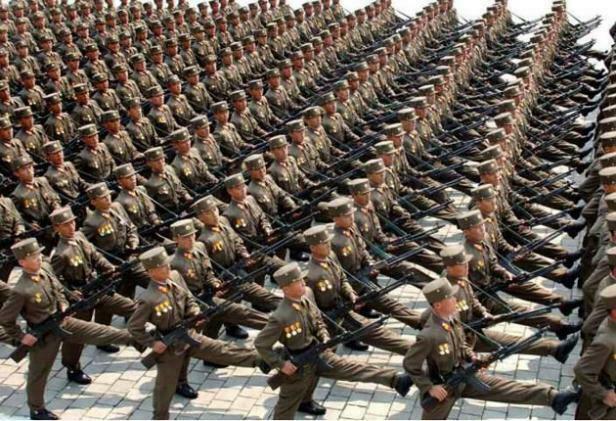
      After shutting off contact with South Korea and threatening the West, North Korea has suddenly decided to send many of its soldiers to within sight of the Korean Demilitarized Zone. These soldiers then proceeded to help the farmers dig and plant the spring crops in the midst of barbed wire and tank traps.
      Understandably, South Korean soldiers are uneasy and the border zones are closed to tourists. At the same time, North Korea also stopped all access to the factory park jointly run between the two Koreas. In a typically North Korean move, South Korea has threatened "grave measures" if North Korea refuses talks to reopen the park.
      North Korea, in response, has threatened nuclear war. It's recent missile and weapon tests are indications of its ability to do so, if only passably and in a suicidal effort.

Crossing the Red Line


     The UK, France, and the Israel have confirmed the use of chemical weapons in Syria. The United States has not confirmed the use of chemical weapons in Syria, but John Kerry is telling NATO to consider its role in Syria and how the possible use of chemical weapons changes the landscape of the crisis. The question lies in the fact of what the United States, or more specifically, what may the Obama administration may do?

   In August of 2012, Obama said “that any effort by President Bashar Al Assad to use chemical weapons would have significant consequences.”

   Three countries have now approved the fact Syria has now crossed Obama’s “red line.”

   One option people may consider is arming the rebels.

                  The UK has hinted at the possibility of arming the rebels, but the United States still has reservations about the possibility. There was already an inherent belief that the Syrian rebels were vulnerable to shifts in power. But since the announcement of a prominent Syrian rebel group, Jabhat al-Nursa, joining an Iraqi Al-Quaeda, the already worrisome possibility of arming the rebels is more so currently.

                  With the introduction of arms for the rebels, there has been talk about furthering that influence with no fly zones which ultimately may make the United States involved in the crisis. The last thing the American public and the Obama administration wants is another war or crisis in the Middle East especially considering the United States is still wholly involved in Afghanistan.

  The other option may be to continue the use of nonlethal aid to the Syrians rebels.

                   The crisis is escalating too quickly for nonlethal aid to be effective. The United States has doubled the aid it gives to Syria. The UK is signaling that because of the use of chemical weapons, it may send troops. There is no way Assad will be able to save his regime, and there will be a definite change in leadership. As the crisis continues, Assad is backed into a corner and has nothing to lose by attacking the rebel groups with chemical weapons.

  It is hard dilemma that the Obama administration has to face, and I want to know what do you think will happen?

            In the comments below, please respond to the question:

                         “What do you think Obama should or will do currently if the United States officially confirms the use of chemical weapons in Syria?


Thursday, April 18, 2013

New Zealand to Legalize Same-Sex Marriage


   With a vote of seventy-seven in favor and forty-four against, New Zealand is now to be considered as the first nation in the Asia-Pacific region and the thirteenth nation in the world to legalize same-sex marriage.
   Civil unions in New Zealand have been permitted since 2005.  Yet, Wednesday’s decision amends the 1955 Marriage Act, once against same-sex marriage, and also allows same-sex couples from other countries to marry in New Zealand.  With the policymakers that were each voting on the decision having been heavily encouraged to vote based on their conscience, and not on their policy platforms, the results proved to be both surprising and historic.   
   The new law will not go into effect until the end of August.  However, many in New Zealand have celebrated the progressive accomplishment through means of partying in the pubs of Wellington, and through singing the indigenous Maori love song “Pokarekare Ana” in unison with tears of joy.
   However, not everybody is completely in agreement with the recent news.  Australia, New Zealand’s neighbor, shot down the same-sex marriage proposal as it entered Parliament last September.  Julia Gillard, Australia’s Prime Minister, is also strongly against same-sex marriage, and does not seem to be interested in an agreement any time soon.  Meanwhile, other organizations in Australia, like Family First, have created several petitions against same-sex marriage, declaring that marriage should only be between a man and a woman.  Thus, while many Australian same-sex couples are currently making travel arrangements to exchange marriage vows in New Zealand, their marriages will not be recognized in Australia, itself.
   Yet, in retaliation, Australians have recently started a “rainbow rebellion” in which those supporting same-sex marriage “chalk” rainbow colors in public areas of Australia.  Although same-sex marriage still seems to be a stretch for Australia, hope continues to stay within Australia’s gay community as more nations around the world “face reality.”
     
   With New Zealand in the mix, countries that have legalized same-sex marriage now include Argentina, Belgium, Canada, Denmark, Iceland, the Netherlands, Norway, South Africa, Spain, Sweden, Portugal, and Uruguay.

Wednesday, April 17, 2013

The Iron Lady


      At her funeral, most people turned out to show their respect, but there was a significant faction that were there to protest.
      Commonly compared to U.S. President Ronald Reagan, Margaret Thatcher and he were contemporaries and very close allies during the Cold War. Their relationship has been compared favorably to that of FDR and Winston Churchill. Together, they saw the fall of the Berlin Wall. She also saw to the end of the Argentinian occupation of the Falkland Islands, during which members of both the British and Argentine militaries gave their lives.
      At home, she was a deeply polarizing figure. While her funeral saw many mourners, many of them famous statesmen and ambassadors, many in northern Britain held protests or burned effigies in her "memory," still bitter over her closing of Britain's coal pits which left many out of work. In Ireland, IRA supporters criticized her uncompromising stance on the rebels during her tenure.
      However, for her family, the "Iron Lady" is best summed up by the note left on her coffin by her children, "Beloved mother, always in our hearts."

Perspective


     At about this time last year, I was confused about the United States’ role in world affairs, particularly in the Middle East. Like too many Americans, or anyone for that matter, I was especially uncertain why the U.S. had been waging a war in Afghanistan for more than ten years. I knew that it wasn’t about oil, because Afghanistan produces virtually no oil. I knew that it wasn’t about territorial disputes between nations either, because we were fighting Taliban rebels and Al Qaeda, not the Afghan government itself. Because of my relative ignorance, I opposed American military action in Afghanistan. I thought “We are so far away from West Asia, how does anything that happens there affect the United States?”
It wasn’t until I began studying international relations last fall when I realized that I was deprived of the information that would cause everything to make sense to me, that would cause me to obtain a proper perspective. I will concede that I didn’t seek the proper news sources that I should have. I read the San Jose Mercury, which is generally sensational local articles on the front page, filled with ads in the middle and sprinkled with Associated Press stories. I had quit watching television news because I felt that it was either not centered enough or, like my newspaper, had been sensationalized. I had forgotten about the News Hour.
I was brought out of the fog by the articles that my international relations teacher gave me. I started thinking like a global citizen and learned that nearly all nations are connected to each other in some way and any major event in any given country has the potential to cause a shockwave around the world. This made me see the conflict in Afghanistan in a different light. I began making the argument to people that the West Asian country is a haven for Al Qaeda, the group that ultimately conducted the terrorist attacks on September 11, 2001. I also argued that such terrorists are a major threat to the security of our allies. With the people who questioned our involvement with the Afghan government and supported complete unilateralism, I made the point that the government is going to need to be able to adopt a democracy and support its people in order to stop the growth of terrorist and rebel groups in Afghanistan. As a superpower, we truly are obligated to protect our allies, leading NATO forces to destroy any threats.
As soon as I learned more about why the United States was in Afghanistan and became able to analyze examples of military involvement such as these, I became ashamed of what I did not know before and of the fact that I didn’t seek the information that I should have. I do not agree with the direction in which mainstream news media is going, but I think that it is the responsibility of every well-educated individual who wants to express his opinion to find trustworthy, reliable news.
It seemed as if I came late to some great debate. By the time I knew what was going on, the Army, Marines, and Air Force were already packing up, getting ready to go home. Public sentiment had shifted dramatically in the negative direction, giving the military very little opportunity to right the wrong in terms of strategy and continue employing “small war” counterinsurgency tactics, which have only been used for a short time in Afghanistan. Even though I am just a student with a negligible amount of political pull, I feel as if I could have made a difference if I had developed a sense of perspective sooner.

Wednesday, April 10, 2013

Pew Pew: Military Lasers to be fielded by the U.S. Navy.

      I'm sorry, where was your home planet again?

      On Monday, April 8th, the U.S. Navy announced that it was moving ahead with mounting a ship-borne laser on a ship bound for deployment for the Gulf of Arabia. The new laser system, much lighter and cheaper than previous designs, is expected to give the ship, the USS Ponce, a cheap, effective weapon for downing drones and small attack boats, such as those favored by Iran. The Chief of Naval Operations Admiral Jonathan Greenert has stated that the weapon would be able to destroy or damage small drones at $1 worth of electricity.
      Eventually, the Navy, and presumably other armed forces, want laser weapons to increase in power and efficiency to allow it to shoot down incoming missiles, aircraft, and larger targets. Current countermeasures either involved missiles, which cost hundreds of thousands of dollars per launch, or fast-firing defensive canons, which fire upwards of hundreds of rounds per second. Both are limited by the amount of ammunition carried as well as by the cost to operate.
      Contrary to popular belief, lasers are not bullets made of light, in the vein of Star Trek or Star Wars. Lasers behave almost exactly the way one would logically expect a heat beam to behave, that is, invisibly and incredibly accurate. Because heat in the electromagnetic spectrum is invisible, the only warning of a laser attack is something catching fire nearby and maybe exploding.
      The immediate benefits of replacing traditional kinetic weapons with lasers is a substantial improvement in range and accuracy, as gravity and wind do not affect light waves. A long term benefit is that ships will be carrying less weight, as shells and missiles are heavy and take up space.
      Also, lasers are cool.
      The navy laser is just the first project to be pushed towards field testing. The Army and Air Force also have their own prototype weapons, the former to shoot down artillery and mortar shells, the latter to mount of modified aircraft and provide a moving anti-ballistic missile system. The USS Ponce is expected to be redeployed in 2014.