Describe yourself:
I have been described as an analytical person with "chronic euphoria." My opinion is that world events are more interesting in the past tense and science is more exciting the future tense, and most of the research that I do for fun reflect that. Outside of studies, I'm an avid reader, gamer, and writer, quite possibly with an overactive imagination.
How did you become interested in International Relations?
My dad introduced me to strategy games at a very young age, so I picked up on the basic ideas behind politics and history pretty quickly. For me, the motivations and effects behind history came easily, and International Relations was an extension of that, except that everything is in the present instead of the past.
Unlike what seems to be the norm, growing up as a Chinese-American child has been utterly unremarkable for me. I didn't have very many conflicts trying reconcile my heritage and my environment, despite, or maybe because, I spent most of my school years in an American school system with an Asian majority.
I did, however, focus more intensely on Western history than I did on Asian history, probably because most historical strategy games are developed by western companies for western consumers. There may have also been the issue that there are relatively few books on Asian history written by culturally Asian authors in English.
Who said games rot the brain?
Favorite topics/focuses, regarding International Relations?
I don't have much of a mind for remembering recent events or names of prominent public figures, however, I do enjoy analyzing the potential motivations behind world events and extrapolating potential actions that could result. I believe that by using history as a starting point, any action committed by a political entity can be understood and analyzed for future actions.
What you plan on majoring in, in the future?
Biology, or failing that, some other science. Not that I lack passion in International Relations, but I really am a shy and introverted person. I really don't think a future that requires such a high level of human interaction is for me.
Character/public figure you hope to emulate?
I have no idea. As far as public figures go, I was fairly determined to make my own way in the world. I still am.
Why did you join the Plenipotentiaries?
Alexis sent an email one day about writing a blog. It hit me out of the blue but I jumped on because it's not every day that I get to write about something I'm passionate about.
What do you hope to do after leaving Mills?
I hope to do what everyone else hopes to do, make enough money doing a job I love to live life. Odds are, because of my science focus, I won't be out of college for quite a few years, but after that, anything goes. I would like to travel, maybe revisit the places my parents took me as a child, but this time seeing the world through a more mature (and physically higher) perspective.
Tuesday, May 7, 2013

Sunday, May 5, 2013
About Us: Alexis Dale-Huang
 |
| Decorations at an outdoor bakery in Meinong, Taiwan. |
- Describe yourself:
I would describe myself as a
perpetually curious and nostalgic individual, with interests varying from the
Chinese language, to eating foreign delicacies and studying contemporary
American politics. I also have
slight obsessions with Coldplay and J. Crew.
- How did you become interested in International Relations?
Coming from a
biracial background, I genuinely think it is important to fully understand your
own culture(s), but also the cultures of others around the globe. I grew up in a household with what my
friends like to call, “switched parents”: my Taiwanese father is considered
“white-washed” due to his preppy style and inability to read and write
Mandarin, while my Caucasian mother is currently a Chinese history professor,
fluent in Mandarin, and knowledgeable of Chinese cuisine and customs. After struggling to really understand
the disparities between my two cultures, and eventually seeing them, I became
interested in learning more about cultures other than my own by reading novels
by writers such as Haruki Murakami, Khaled Hosseini, and Rohinton Mistry. With these readings, I gradually
developed a passion for history, foreign languages, and politics, and
discovered International Relations with my mother’s guidance.
I quote my English
teacher as I state, “context determines meaning,” in this setting.
- Favorite topics/focuses, regarding International Relations?
Although I often invest my free
time reading up on Asian culture and the histories of nations in the Pacific
Rim, I have recently discovered an interest in human rights in oppressed
countries, and the cultural aspects that affect the politics of such
societies.
- What you plan on majoring in, in the future?
I have declared a major in
International Relations, and hope to either double major in Communications, or
minor in Asian Studies.
- Character/public figure you hope to emulate?
I’m afraid I can’t answer this;
there are too many!
- Why did you join the Plenipotentiaries?
My colleague, Marie Johnson, and I
originally created this blog to allow ourselves to conduct more in-depth
research on our topics of interest.
Yet, as the blog grew, I found that I was able to not only become more
aware of what was going on in all parts of the world, but was also able to
educate my fellow peers through my posts, and ultimately have a better
experience in the process.
- What do you hope to do after leaving Mills?
As I begin my studies at my
selected four-year university next year, I hope to study either French or
Arabic in college, while continuing my Mandarin, and plan on studying abroad
several times with my university’s various programs. While my main goal for the next four years is to continue
exploring all of my interests in school and eventually find the career that
fits with them. I also hope to return to my original hometown of Washington,
D.C.
Tuesday, April 30, 2013
Soft Power

Soft Power, according to Joseph S. Nye, is a country's ability to attract others to its point of view. In other words, it is a "pull" factor in getting others to work toward a country's goals. In terms of a metaphor, it is a carrot dangled in front of a pig. Hard Power, on the other hand, is a country's ability to force others to serve its goals. Going back to the pig metaphor, this would be the stick that threatens to hit the pig should it disobey.
Soft Power would be like the United States to get another country, say Great Britain to join in an economic agreement because that would be beneficial to both countries. Hard Power would be like the United States getting a trade agreement out of Japan because a squadron of armored gunships appeared in Tokyo harbor and it would be incredibly unwise to refuse at that moment.
According to Nye, Soft Power comes from having an attractive culture, upstanding political values, and moral foreign policies. In his article in Foreign Policy magazine, he notes that America's substantial Soft Power comes from its culture. It makes sense to seek economic partnerships with American business because of its economy power all across the globe. At the same time, American politics stay true to American morals and its foreign policy is ostensibly aimed towards improving living conditions. (That improving living conditions coincide with advancing American interests is probably why one can both love and hate American policy overseas at the same time.) Additionally, the diffusion of American culture throughout the world makes Americans seem less scary, in contrast to our often-skewed perceptions of other countries.
On the other hand, Nye talks about China and Russia's heavy-handed attempts to use Soft Power, which are portrayed as misguided and misunderstood. Both countries strike me as reminiscent of the to-be-colonized peoples of the European Imperial Age trying to buy firearms but not adopt the industry and discipline necessary to fight back effectively.
China invests in Africa to combat poverty and builds schools in Manila, but continues to crack down on human rights. Russia's Putin talks about the need to use Soft Power but uses his military on Georgia. Already, they've shot themselves in the criteria that call for upstanding political values and foreign policies. The only thing that remains is having an attractive culture, of which China has some, and Russia has little. Russia, incidentally, also has few allies, while China has strong trade relations because of its manufacturing base.
In the absence of substantial Chinese cultural diffusion, it has to keep its Soft Power policies afloat by being a massively powerful economy, which it does with aplomb. There is a phrase I heard once that would sum up China's Soft Power cornerstone for the time being: "If God made everything, He would live somewhere in China."
If China and Russia want to have things their way by doing the political equivalent of asking nicely, they'll have to prove themselves to be "nice" countries first.
Sunday, April 28, 2013
So... I Bought a Llama
Yes, I actually bought a llama.

While going through my family’s
daily dose of L.L. Bean, J. Crew and Pottery Barn catalogs during last year’s
holiday season, I found a smaller catalog, with a sheep on the cover that
immediately caught my attention.
Upon seeing the Heifer International logo on the bottom of the cover, I
began to recall the church announcements I often heard around the holiday
season, regarding Heifer International and how you can literally buy a cow for somebody in
another country for only a small sum of money. Curious, I flipped through the catalog to see what the
options were, and finally saw a llama – a gift surprisingly fun and affordable,
with its price of $150.
Based in Little Rock, Arkansas,
Heifer International is a global nonprofit organization that works to eradicate
hunger and poverty worldwide. As a
way to meet the needs of families and individuals in over the forty countries
impacted so far, Heifer International offers a wide variety of donation options, ranging from
sending a girl to school, to starting a business, to buying goats. In operation since 1944,
Heifer International has helped over 18 million families around the globe restart their
lives, and build a sense of hope within each of the communities affected.
 |
| While I still have yet to watch the movie, I have heard it is just as intellectually fulfilling and eye-opening as the book. |
As I was reading Nicholas
Kristof and Sheryl WuDunn’s novel, Half the Sky: Turning Oppression into
Opportunity for Women Worldwide, at the
time, I was inspired by the novel’s stories of the attempts women made to
recreate lives for themselves in their oppressed circumstances. Thus, I decided to take advantage of
the opportunity Heifer International offered, and began to save up for my llama as my
paychecks began to come in.
I will admit that I was skeptical
of Heifer International, at first, and felt uneasy as I began to save up my
money. Yet, after doing my
research, I was able to find Heifer International mentioned in not only the
foreign aid packets I received in my International Relations class, but also in
smaller online newspapers, and the New York Times, with an article written by Kristof, himself! With this reassurance, I gradually saved up all of my money, and
finally made my purchase last December, in hopes that the recipient family
would receive their llama before the New Year.
While I sometimes wonder how the recipient family's llama is doing, wherever it is in the world, it still feels
incredible to know that I was able to invest my money in something worthwhile. Thus, if you’re ever feeling generous, or are just curious about Heifer International and its donation options, I highly recommend looking on Heifer International’s
website. Who knows, maybe you will
want to buy something, too!

Heifer International also allows you to make donations under somebody else’s name. I know several people that
have bought each other various animals for each other’s birthdays and holiday
gifts, and they have all been very happy with their purchases.
Wednesday, April 24, 2013
Master of the Mixed Message: North Korea
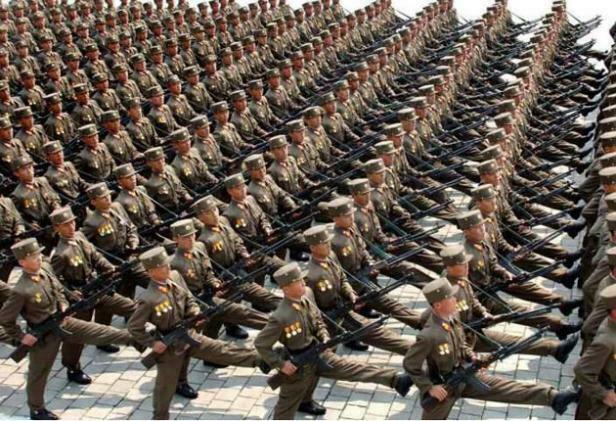
Understandably, South Korean soldiers are uneasy and the border zones are closed to tourists. At the same time, North Korea also stopped all access to the factory park jointly run between the two Koreas. In a typically North Korean move, South Korea has threatened "grave measures" if North Korea refuses talks to reopen the park.
North Korea, in response, has threatened nuclear war. It's recent missile and weapon tests are indications of its ability to do so, if only passably and in a suicidal effort.
Crossing the Red Line
The UK, France, and the Israel have confirmed the use of chemical weapons in Syria. The United States has not confirmed the use of chemical weapons in Syria, but John Kerry is telling NATO to consider its role in Syria and how the possible use of chemical weapons changes the landscape of the crisis. The question lies in the fact of what the United States, or more specifically, what may the Obama administration may do?
In August of 2012,
Obama said “that any effort by President Bashar Al Assad to use chemical
weapons would have significant consequences.”
Three countries
have now approved the fact Syria has now crossed Obama’s “red line.”
One option people
may consider is arming the rebels.
The
UK has hinted at the possibility of arming the rebels, but the United States
still has reservations about the possibility. There was already an inherent
belief that the Syrian rebels were vulnerable to shifts in power. But since the
announcement of a prominent Syrian rebel group, Jabhat al-Nursa, joining an Iraqi
Al-Quaeda, the already worrisome possibility of arming the rebels is more so
currently.
With the introduction of arms for the rebels, there has been talk about furthering that influence
with no fly zones which ultimately may make the United States involved in the
crisis. The last thing the American public and the Obama administration wants is another war or crisis in
the Middle East especially considering the United States is still wholly
involved in Afghanistan.
The other option may
be to continue the use of nonlethal aid to the Syrians rebels.
The
crisis is escalating too quickly for nonlethal aid to be effective. The United
States has doubled the aid it gives to Syria. The UK is signaling that because of
the use of chemical weapons, it may send troops. There is no way Assad will be
able to save his regime, and there will be a definite change in leadership. As
the crisis continues, Assad is backed into a corner and has nothing to lose by attacking the rebel groups with chemical weapons.
It is hard dilemma
that the Obama administration has to face, and I want to know what do you think
will happen?
In the comments below, please respond to
the question:
“What do you think Obama should or will do currently if the United
States officially confirms the use of chemical weapons in Syria?
Thursday, April 18, 2013
New Zealand to Legalize Same-Sex Marriage
With a vote of seventy-seven in favor and forty-four
against, New Zealand is now to be considered as the first nation in the
Asia-Pacific region and the thirteenth nation in the world to legalize same-sex
marriage.
Civil
unions in New Zealand have been permitted since 2005. Yet, Wednesday’s decision amends the 1955 Marriage Act, once
against same-sex marriage, and also allows same-sex couples from other
countries to marry in New Zealand.
With the policymakers that were each voting on the decision having been
heavily encouraged to vote based on their conscience, and not on their policy
platforms, the results proved to be both surprising and historic.
The
new law will not go into effect until the end of August. However, many in New Zealand have
celebrated the progressive accomplishment through means of partying in the pubs
of Wellington, and through singing the indigenous Maori love song “Pokarekare
Ana” in unison with tears of joy.
However,
not everybody is completely in agreement with the recent news. Australia, New Zealand’s neighbor, shot
down the same-sex marriage proposal as it entered Parliament last September. Julia Gillard, Australia’s Prime
Minister, is also strongly against same-sex marriage, and does not seem to be
interested in an agreement any time soon.
Meanwhile, other organizations in Australia, like Family First, have
created several petitions against same-sex marriage, declaring that marriage
should only be between a man and a woman.
Thus, while many Australian same-sex couples are currently making travel
arrangements to exchange marriage vows in New Zealand, their marriages will not
be recognized in Australia, itself.
Yet, in retaliation, Australians
have recently started a “rainbow rebellion” in which those supporting same-sex
marriage “chalk” rainbow colors in public areas of Australia. Although same-sex marriage still seems
to be a stretch for Australia, hope continues to stay within Australia’s gay
community as more nations around the world “face reality.”

Subscribe to:
Posts (Atom)