Wednesday, March 13, 2013

Competition


     In the United States, our culture fosters the expectation that growth, economic and otherwise, is constant. In the past twenty or thirty years, however, we have seen less innovation than during any other period of time in the last century. What is the common denominator? What is different now?
     Last Friday, I was listening to Fareed Zakaria give a speech about the infinitely repeating cycle of rise, peak, decline, crisis in civilizations and how it relates to actual threats to our society and economy. What struck me was how he identified that one of the greatest issues that our nation currently faces is the lack of international competition. He stated that competition is the principal force that drives the growth of a nation. Without it, we have little incentive to change and innovate. This is when I realized that the Cold War may have been the best thing that happened to the United States in the past sixty years.
     Like most people, when I thought about the Cold War, the first things that came to mind were the widespread paranoia of nuclear proliferation and the wonderfully cheesy black-and-white anti-communist propaganda videos.
     What I found is more important is the innovation that was spurred by our competition with the Soviet Union. The end of the Second World War was the starting block for a race between nations that was to last over forty years. The two nations were in fierce competition. The fear of potential confrontation fueled rapid positive changes in nearly all aspects of American society and government.
     The Marshall Plan of 1948 was a massive change in US diplomacy. The funding of the reconstruction of crumbled European countries was intended to prevent Europeans from falling into poverty and turning to communism. This brilliant foreign aid packaged accomplished the stabilization of democracies throughout Western Europe and the growth of the global economy by providing a solid foundation for various markets.
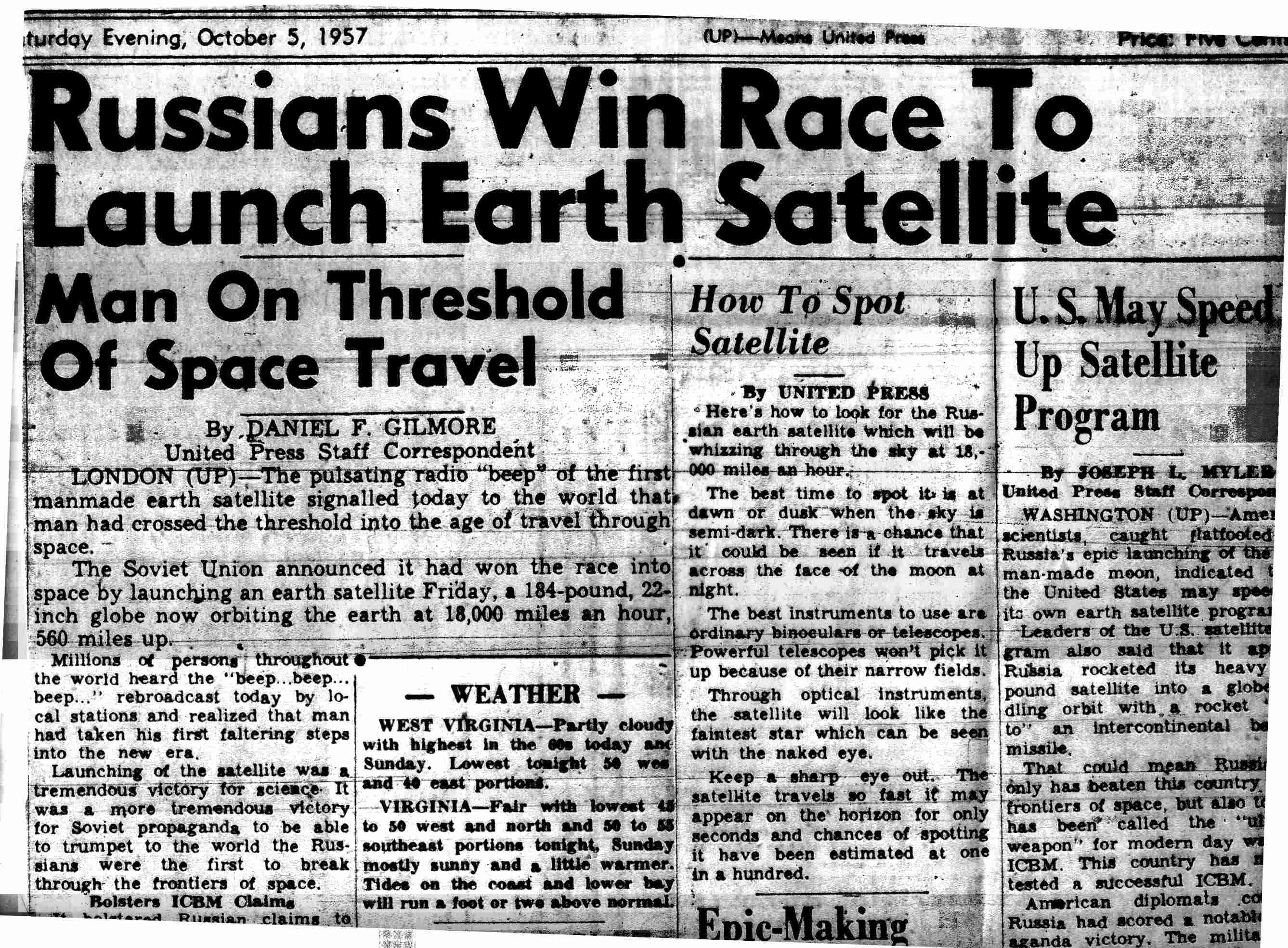
     The Soviets' successful launch of Sputnik was a shock to the American people. It gave the United States a major incentive to fund improvements in math, science, and physical education. The satellite also motivated the federal government to create the National Aeronautics and Space Administration, which was to subsequently launch successful missions to the Moon.
     Communist uprisings around the world pushed the government to rethink its military strategies, focusing more on small-scale operations and less on more traditional large battles.
     Without competition, our nation will maintain a slow rate of innovation and creativity. It is safe to say that, without the Cold War, the United States would be much worse off.

Monday, March 11, 2013

Fighting the Future via the Past. Pt 3

Second Generation


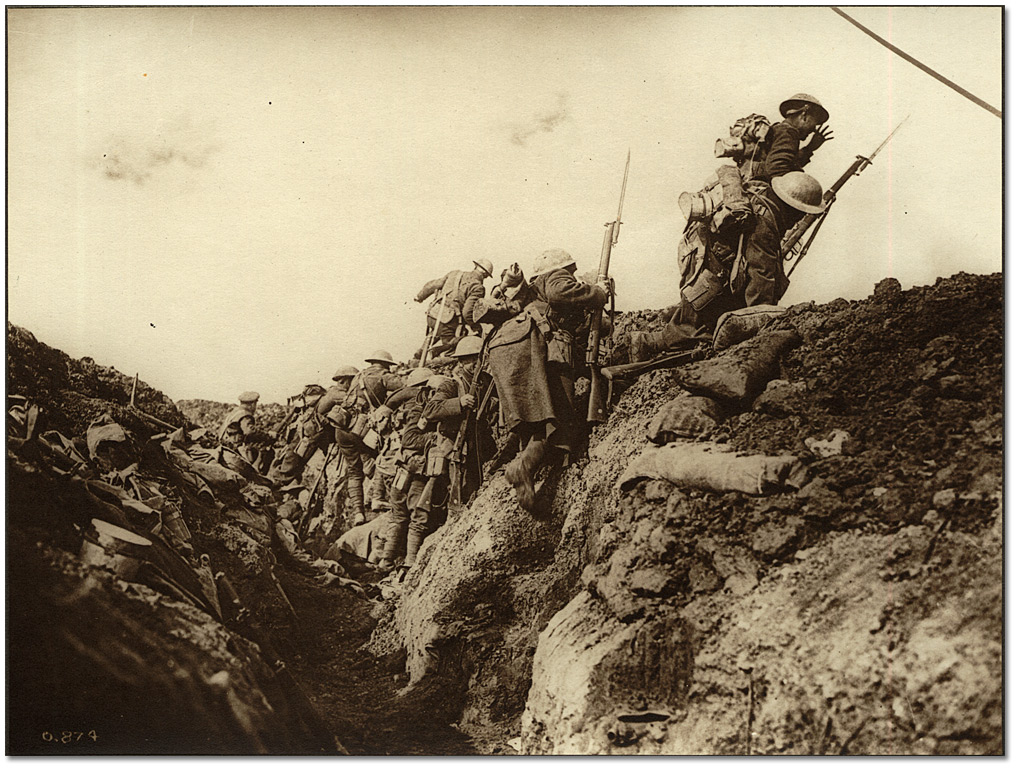
      In the 18th century, a mass of men standing in lines exchanging musket fire was an acceptable way to fight wars because the weapons of the time were inaccurate and slow to reload.
      In the 19th century, a mass of men standing in lines exchanging rifle fire was a costly way to fight wars because the weapons of the time were accurate and deadly.
      At the start of the 20th century, ostensibly with the invention of the machine gun, men in the open were men already dead. No amount of courage or elan, the French word for the will to win, was sufficient to overcome explosive artillery shells raining down metal shards or guns that could fire five hundred rounds a minute.

      The massed manpower of the previous generation of warfare no longer mattered in the face of such devastating destruction. But the commanders and theoreticians of the mid 1800s and early 1900s were still the products of the previous age of warfare. Instead of massed manpower, the focus shifted to that of massed firepower. Strategy became based around the idea that by inflicting more material losses to the enemy then one received, the enemy would be forced to surrender. 
      While the previous generation introduced order to the battlefield, the changing technologies created a more disordered battlefield. This method of war developed in response to the chaos as commanders tried to create order with controlled command systems and artillery when order with men became suicidal. Generals could no longer order their men to stand in lines, but they could still have cannons fire on schedule and attacks take place on time. 
      With this idea came the idea of a material war. A minor and oft-undiscussed factor is the change in banking practices that allowed nations to finance war past the limits of hard bullion. Now wars were measured in the amount of men and materiel that a nation could put on a field and so was victory. This does not mean that wars were fought with the sole idea that one could bleed the enemy dry, but in the stalemate of World War 1, it was one of the proposed solutions.
      But in order to persecute this kind of war, the nation and the military had to be one, and if not, at least closely related. A war costs untold amounts of men, materiel, and most importantly, money, all of which needed to be drawn from the country and its populace. One such effect was widespread propaganda that prepared the population for the sacrificed needed to sustain a war of any length.
      The gradual melding of the battlefront with the home will be taken to new lengths with the responses to the developments of the second generation of war, but it has already started with the first taste of the industrialized battlefield. No longer can the family sit home and receive letters while Johnny goes to war, now mother must work in the munitions factory, father must build trucks, and sister Jenny must make uniforms.

Saturday, March 9, 2013

Climate Change: Adapting to the Inevitable

http://www.gillespiehouseinn.com/images/CareEnvironmentLogo-Large.jpg

     It’s all in our heads.

     That was an essential point that John Steinbruner, Amy Luers, Susanne Moser, and Kenneth M. Chomitz floated into the diffusive cloud of our collective consciousness regarding climate change. We have the technological capabilities, but we’re not doing much. We concern ourselves with specific costs that entail mitigation programs when it’s “not meaningful” to do so, as Dr. Chomitz said. So where does the true issue lie?

     Perhaps the roots of our problems are tangled within our culture of not taking effective action until we meet the dire consequences face to face. Mark Hertsgaard, the moderator of the “Climate Change: Adapting to the Inevitable”  discussion, raised an intriguing question about why parents, having faced the feat of guarding their children from World War II and terrorist attacks in previous decades, are not as quick to prepare for the increasingly immense scale at which environmental damage is affecting us. The effects of climate change are threatening us from all angles, and yet we fail to mobilize.

     I agree that we as a people need to shift our priorities. Only then can we move towards creating satellites specially designed for monitoring environmental changes and effectively call upon our government to cooperate with other countries to establish a global carbon price. Until we rid ourselves of this “attitude problem” about reducing greenhouse gas emissions and initiating climate change talks in our communities, we will be the ones to tell future generations that we just stood by and watched.


This is a re-post of an entry I wrote for the World Affairs Education Program Blog on "Climate Change: Adapting to the Inevitable," one of the many intriguing dialogues from this year's annual World Affairs Conference. See the link below.
http://wacsfschools.wordpress.com/2013/03/08/its-all-in-our-heads/

To watch and listen to John Steinbruner’s talk, visit: http://www.worldaffairs.org/audio-video/2013/climate-change-1.html

Friday, March 8, 2013

Farewell, Hugo Chavez


Photo credits to the New York Times.

Before beginning his fourteen-year-long presidency in 1998, Venezuelan President Hugo Chavez started off in the Venezuelan military, and later helped lead a coup d’etat in 1992 against former President Carlos Andrez Perez, whom was later removed from office.   Inspired by political figures Simon Bolivar and Colonel Muammar el-Qaddafi of Libya, Chavez hoped to unite the region around Venezuela, and wanted to rid of anything influenced by the United States. 
Yet, despite his resentment towards the United States, this past Wednesday marked a day of extreme sadness and loss in Venezuela, as Hugo Chavez died of pelvic cancer at the age of fifty-eight.  With Chavez now dead, there is one main question many in the world have begun to ask themselves: What is to happen to Venezuela?
Since his death, the streets of Venezuela have been filled with thousands of supporters, some to grieve and some to protest for a continuation of Chavez’s policies, and the government has called for seven days of mourning that include no school, no work, and no alcohol.  Many of Chavez’s followers have been waving red, blue, and yellow flags outside of the Fuerte Tiuna Military Academy, the current residency of Chavez’s body, for the last few days.  Meanwhile, elections for the next President are to be in thirty days, and Chavez’s successor, Vice President Maduro, seems to be the likely candidate for the United Socialist Party in Venezuela. 
Regarding Venezuela’s relations with foreign markets, oil prices are definitely subject to change.  With Venezuela being one of the world’s largest producers of oil, many nations now have to question how Chavez’s death and the new leadership will affect the rest of the global market.  Furthermore, how will the United States deal with such a loss, and will its policies towards Venezuela change in the weeks to come?
With the end of a fourteen-year term, Venezuela now faces the challenge as to what to do next.  However, the spirit of Hugo Chavez continues to live on as thousands mourn and grieve for their lost “Comandante.” 

Wednesday, March 6, 2013

Fighting the Future via the Past. Pt 2

First Generation


     The Battle of Lutzen, in 1632, is often considered to be the bloodiest battle in the 30-Years War. For some seven hours, 40,000 men from the Holy Roman Empire and the Swedish Empire fought, only stopping once night fell. In total, more than a quarter of the men were killed or wounded. 
      Two hundred years later, in 1812, Napoleon and his Grande Armee met the Russian Empire at the Battle of Borodino. Both armies suffered an estimated 80,000 casualties in that single day of fighting, out of the starting total of 250,000.

      So what happened in between these two wars that made armies so huge? 

      According to the ideas of the 4 Generations of warfare, the rise of the nation-state happened. The first paradigm shift came with the Peace of Westphalia at the end of the 30-Years War, which effectively gave states the exclusive rights to organize its own armies. No longer were armies owned by their captains, who were also owned by their feudal lords and their feudal lords. Under the nation-state, all of a state's military was subordinate to its ruler, who could now more effectively gather men for war.
      The Peace of Westphalia sought to end the wars that had ravaged Europe previously by creating a framework for a sovereign state and its affairs with the outside world. The most important tenet was that a sovereign state had exclusive control over its own people, military included. In Central Europe, the Holy Roman Empire was effectively broken into over 300 independent states and the feudal system collapsed. 
      Prior to this change, combat was typically irregular. The famous battles of the Medieval Ages and the Early Reformation were exceptions to the general idea of "war," which consisted mostly of raiding. Even the armies that took part in these battles were very often alliances very tenuously held together by shared circumstances. The change to centrally-controlled armies was the first attempt to bring order to the battlefield. The most visible of this new "order" is the idea of uniforms, saluting, and stratification of military ranks.
      But aside from more organization, strategy and tactics changed according to technology, not from the Peace of Westphalia. The changeovers of the next Generations will be less subtle, as a result of technology far outstripping the limits of the human body. A bow and arrow functions a lot like a musket on the battlefield. But a machine gun, what is a machine gun?

AIDS: Eradication at the end of the tunnel.

   
      Two and a half years ago a baby was born to an HIV-infected mother and tested positive for the virus. Within thirty hours, the attending doctor gave the baby a three-drug dose of antiviral medication.

      It has been over a year since the baby stopped receiving antiviral medication. She is still HIV free.

      The news was announced last Sunday in the 2013 Conference on Retroviruses and Opportunistic Infections in Atlanta, which marks the second known case of a person being freed from HIV. The first patient, Timothy Brown of San Francisco, underwent a bone marrow transplant to replace his defensive cells with an immune version from a donor. Such a treatment is highly costly, as well as being unsuitable for a widespread cure for large a number of issues.
      However, the child was treated using common medications, with no prior planning save routine tests and the attending doctor's quick action. Dr. Hannah Gay is credited with the cure and it is believed that the speed and intensity of the treatment helped to destroy the virus before it can form hidden reservoirs in the child's immune cells. After the formation of reservoirs - virus DNA hidden in the genetic code of a patient's infected cells - conventional treatment can take up to seventy years of steady treatment to remove HIV completely.
      While Dr. Gay's treatment does not work on longtime patients or those who have been infected through other means aside from in-utero, it does present a very possible way to stop mother-child transmission, of which almost a thousand cases happen daily, most of them in the developing world.
      Research is now underway to see if this method can be applied to other newborns.

Tuesday, March 5, 2013

Counter Aid to Syria from Extremist: Good/Bad?


         As Syria’s calamity of political transition continues, United States and several other nations want to increase the supports to Syrian rebels. One of the big reasons is to counter the political and military aid offer by extremist. This aid will includes military equipments and training, humanitarian assistance  and political advisory, said by Secretary of State John F. Kerry.
         It is not surprising that extremists would make expansion in Syria under the turmoil and bloodsheds that left cities devastated into piles of rubble. However, that is one issue. If we look at Syria in a bigger picture, the biggest problem remains: Assad is still in power. The Syrian oppositions have no choice but fight to remove due to Ba’ath government’s violent actions implemented toward mass protests that resulted deaths of many protestors, then escalated, which led what is now Syria today.
          Regardless of the past, Syria is now facing terrorist expansion, endless gun fights, and homeless children. More importantly, Assad is still in power of the Ba'ath government. Although the aid that will be used for counter aid offered by terrorists, however will it ensure a safe political transition in Syria in the mean time? Or Syria will continue its civil war?