Saturday, March 23, 2013

Possible Chemical Weapon Use in Syria

The United Nations has agreed to investigate accusations about chemical weapon use in Damascus and the Aleppo province in northern Syria. The United States viewed these allegations with skepticism, but the different claims between the Syrian government and opposition forces have called for verification from United Nations officials. The central government claims that it lacks chemical weaponry and that it would not use chemical power against civilians; opposition forces insist that they also do not have such weapons and do not have the ability to make them.

However, many military analysts believe that Syria possesses one of the largest supplies of chemical weapons in the world. These stockpiles may include nerve agents such as sarin and VX gases as well as mustard gas, which is prohibited under international law.

Why would countries even use chemical weapons if they could possibly detriment their own people? Compare chemical weapons to nuclear power. Chemical weapons are relatively much less expensive and they are easier to stockpile. They can be used more frequently than the costly, few atomic bombs that countries create. In general, they can be easier for armed troops to handle and use at will. Especially in Middle Eastern countries, armed forces also view chemical power as a possible method of combating or at least deterring the nuclear weapons that Israel possesses.

Last August, President Obama stated that the Syrian government would be held accountable for use of chemical weapons within the country; use of or transport of chemical weapons would draw "a red line for us." If Syria truly is home to such deadly chemical weapons, will the United States finally become more involved in the Syrian conflict?

Thursday, March 21, 2013

Rat and Nuclear Panic in Fukushima


During March 20, a power cut occurred in the tsunami-hit Fukushima nuclear power plant which caused city’s power outage. The suspect: a rat.
It is no surprise that the tsunami-devastated Fukushima is still in recovery.  Tepco, the company that owns the nuclear power plants in Fukushima, is currently struggling to stabilize the cooling systems, which shutdown during the incident, causing instability in the reactors.
Luckily, the cooling to reactors themselves was not affected. However the system’s cooling water was infected with radioactivity as the nuclear rods failed to operate, which took engineer 30 hours to repair.
With further investigation, Tepco discovered the short circuit originated in a makeshift switchboard. Next to it, there lays a dead rodent covered in burn marks.
          Afterward, Tepco quickly concluded that the poor rat is the prime suspect of the city’s power outage, and also indicated that this incident reflects the fragility of the power plant after the meltdown 2 years ago. 
Finally, the company announced that the system has been restored, and the reactors are no longer giving off radiation. Nevertheless, the city of Fukushima has gone into a nuclear panic, all caused by this one rodent chewing an electrical wire. 

*Tepco has already released the picture of the scene which I find it unpleasant and decided to replace it with another "more digestible" picture.


Wednesday, March 20, 2013

Fighting the Future via the Past. Pt 4

Third Generation


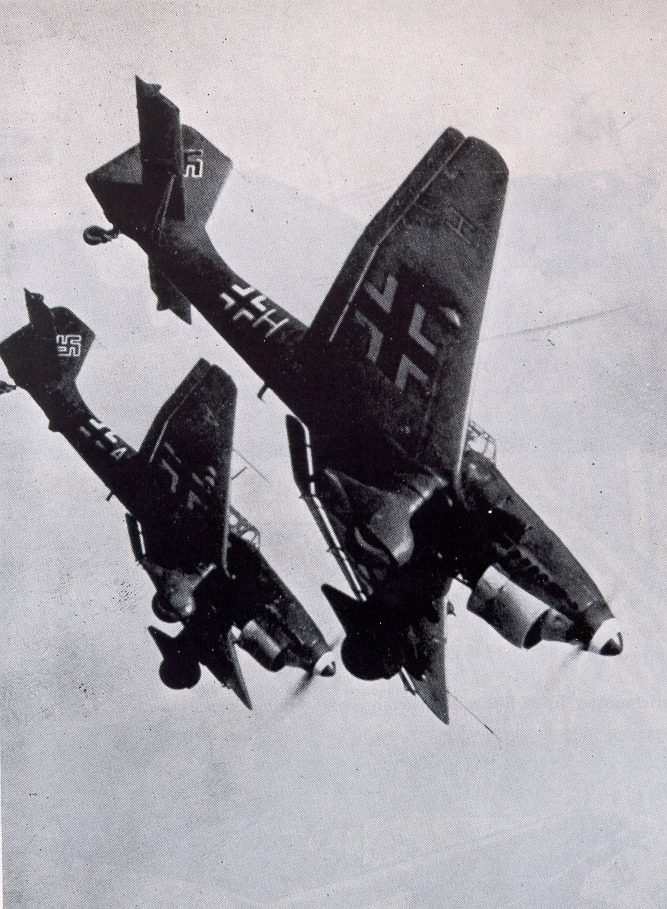
      France and Great Britain's declarations of war against Nazi Germany seemed to be a repeat of the First World War. German discipline would come face to face with French determination and British heroism in a mighty clash that would ultimately result in Germany dashing its forces to pieces against the mighty Maginot Line, a line of fortresses bristling with cannons and machine guns. After all, the lessons of the previous war had taught elan was worthless in the face of the modern arsenal.
      One month and twelve days later, France had fallen, and the British had fled from the continent.

      First seen in the closing months of the First World War, third generation warfare is the opposite idea to second generation warfare. Instead of trying to force order onto a battlefield, commanders seek to create it. Junior officers are encouraged to take the initiative and act on their instincts rather than wait for their distant generals. Tactics now emphasize speed and mobility over firepower.
      Rather than destroying the enemy in pitched battle, third generation tactics aim to break through enemy lines and collapse his position by causing confusion in his rear and among his supply lines. The idea behind this method of fighting is to use clever strategies to overcome a material disadvantage, such as that faced by Germany during both world wars.
      Third generation warfare also differs from second generation warfare in the matter of home involvement. Previous wars had left populations largely intact, but third generation warfare makes a target of civilian populations. This should not be confused with the genocides perpetrated by the axis forces during the Second World War. A more accurate example would be the American and British bombing campaigns, which targeted industrial regions in German and Japan to try and destroy their production capacity.
      Rather than inflicting more casualties than the enemy can afford to replace, third generation strategy (not to be confused with tactics, which refer to plans on the battlefield) tries to destroy the enemy's ability to replace any casualties at all. Population is only targeted for its ability to produce, not for the value of causing more death.
      This manner of thinking will be reversed as we continue on to the fourth and current generation of warfare.

Tuesday, March 19, 2013

Risk

     In 2011, when the world watched in horror the tragedy of the tsunami and earthquake in Japan and the nuclear meltdown that ensued, I thought, "this may be the death of nuclear power as we know it." I knew that the world's opinion of using atomic energy to generate electricity would suddenly become more negative because the inherent risks of nuclear power would be brought to people's immediate attention. But, at the time, it did not have a significant impact on me. I did think that it was a shame that such an efficient method of  creating electricity would be abandoned, but I can't say that I was saddened by the inevitable decrease in popularity of atomic energy. "The risks of a meltdown or other malfunction outweigh the benefits" is what I thought.
     The last few weeks in my international relations class have been centered on an oil unit, where we learn about petroleum's effects on the world's conflicts, economy, diplomatic environment, and physical environment. It was in the first few days of this unit that I realized that all major methods of harvesting energy have risks. The oil trade stirs conflict between nations. It also significantly contributes to global warming, which experts have claimed will cause the death of hundreds of millions, if not billions, over the next few centuries. Making power by burning coal is inexpensive, but it also perpetuates the greenhouse effect at an exponential rate. The risks that come with nuclear power are different than those of carbon-based sources of energy, but they are ultimately equal to those of oil and coal over a long period of time.

Editor's note: I do not mean to marginalize the tragedy of what happened in Japan in 2011. 

Iran's Inevitable Nuclear Power Status

In light of recent events concerning Iran and it's nuclear weapons program, I have decided to dedicate a post to the convoluted question of Iran's quest to join the ranks of the nuclear superpowers.

There is implicit evidence in Iran's actions that proves that is developing a nuclear weapon. For one, Iran has (numerous times, in fact) concealed the fact that it had created facilities for nuclear enrichment. If Iran was constructing these facilities for the "peaceful purposes" for which it claimed, why would it need to conceal them? There is no doubt in my mind that these facilities were meant for the creation of nuclear weaponry. In addition, Iran has been adamant in continuing its nuclear program despite numerous sanctions being imposed, and threats of military action. If Iran had innocent intentions, it would have stopped its program then and there, and subject itself to inspections by the International Atomic Energy Agency.

In my humble opinion, the question is not whether Iran will create nuclear weapons, it is when it will create them. Even though the sanctions are cutting into Iran's economy and wounding the oil industry, Iran shows no plans of backing down. This has multiple factors: Iranian pride, which would be shattered if the government bowed its head to the West and shut down its nuclear program ; the mammoth loss of rare resources, time, and equipment that it had already invested; the lack of any leverage that the general populace has on the continuation of the nuclear program due to the theocratic, nondemocratic government; and the idea that Iran had already known that it was going to receive these sanctions, and was ready to make sacrifices in order to reach its goal.

Both America and Iran both have done horrible things to each other. Neither can claim the higher moral ground, and say that they are right and the other is wrong. I believe the first step in creating a brighter tomorrow is for the two countries to formally apologize for past events, and most importantly create better communication between the two. The lack of understanding and trust between Iran and America will only lead to clashes in the future; in the globalized world of today, we can only hope that they can make up before it is too late.

Thursday, March 14, 2013

The Iranian Nuclear Crisis

     Tonight was one of the best speaker sessions that I have attended since I have taken part in World Affairs Council events. It was titled, "The Iranian Nuclear Crisis: A Roundtable Discussion" and was based on Iran's nuclear program and its involvement in international politics. It gave me a better, broader perspective on the issues regarding the arguably most volatile state in the Middle East.
     The panel of experts began by building the background of the issue. Evidently, President Obama was on an Israeli radio station recently, saying that at the rate of which it is currently developing its nuclear capability, Iran is a year away from having a nuclear weapon. Next, the moderator brought up the P5+1 and its discussions with Iran. The P5+1, I learned, is the five permanent members of the United Nations Security Council plus Germany and the principal organization in discussing international politics with the Iranian government. This led to the topic of Iran's economy, which has seen a great deal of sporadic changes and instability over the past few years. Also, over the last seven years, Iran's government has collected sixty percent of the nation's oil revenue, which is absolutely colossal compared to other oil-producing countries. 
     Subsequently, the moderator asked the panel the ultimate question about this issue, "How can the issue of the Iranian nuclear crisis be solved practically while guaranteeing the safety of other nations?"                 Inevitably, the state of Israel was mentioned and a discussion about its position toward Iran's nuclear program ensued. Apparently, many members of Israel's government oppose using military force in an effort to discontinue the nuclear program. Citing the counterproductive 1981 Israeli attack on Iraq to halt their nuclear development, many believe that military action against a nation's nuclear program can act as a catalyst, speeding up the process of research and development.
     Most countries are obviously reluctant to allow the Iranian nuclear program to continue. At a conference, Vice President Biden declared, “Let me make clear what that commitment is: It is to prevent Iran from acquiring a nuclear weapon, period. Period. End of discussion. Period. Prevent — not contain — prevent.” The experts tackled a serious barrier that prevents us from being able to reasonably communicate with Iran: the fact that the United States, as well as the P5+1 for that matter, does not treat Iran as a sovereign state. A member of the Reagan administration pointed out that the United States needs to stop its policy of talking with Iran's leadership only when Iran complies with U.S. regulations and requests. This prevents many conversations that could potentially lead to agreements between Iran, its neighbors, the United States, and Europe. He also acknowledged that there is a high possibility that Iran does not want to develop a nuclear weapon to use offensively, but rather to use as a shield and a deterrent of attacks from Israel and Saudi Arabia.
     Additionally, the panel dismissed the commonly accepted idea that North Korea and Iran are working very closely to collaboratively develop nuclear weapon technology, despite the fact that Iranian scientists have likely observed North Korean missile tests. 
     

Wednesday, March 13, 2013

Half-Breed


My first encounters with others can often be described as humorous, yet puzzling.  After the smiles and my usual, “Hi, how are you?” my new acquaintance’s speculation process immediately begins.  It starts with my brown hair, my large, round eyes, and finally the curiously long surname on my notebook.  Then, after careful deliberation and an awkward silence, the observer finally asks the standard, “Wait, so what are you?” 
Annoyed, but prepared, my only response is, “Hmm… what do you think?”
With answers varying from French, to Filipino, to Mexican-Japanese mix, my seemingly unknown ethnicity has become a trademark I have gained throughout a majority of the duration of my high school career.  My facial features and hyphenated British and Taiwanese surname define me as a typical Eurasian.  However, the pervasive culture of my school says otherwise - especially when my race characterizes me as an outcast of the Asian “model minority.”
I usually ignore random bits of criticism thrown at me, whether it is about my “white people” style of dress or my lack of knowledge in the Asian cultural sphere.  However, this question that chronically seems to ask “Which planet do you hail from?” puzzles me.  I have dealt with small instances involving my race in the past, but I still have yet to understand why people in my neighborhood find “half-breeds” to be the newest anomalies.
Confused.  Lost.  Awkward - All three describe how I felt during my first two years of high school.  I first attempted to assimilate into my school’s culture by becoming depressed over ninety percent scores on tests and by laughing at racist jokes against Caucasians.  Yet, once the jokes impacted my own races on a larger scale, I finally began to wonder why one’s ethnicity plays such a large role in the characterization of another.
When we were kindergartners, nobody cared about who is Middle Eastern, Mexican, or Asian.  Yet, the innocence that we once had throughout elementary school slowly deteriorated as we all developed with an expanded pool of knowledge - one that includes racism.  Thus, with things such as terrorist organizations, Mexican immigration, and “Asian invasion” simmering into the minds of the world today, many sadly choose to characterize people by their race, instead of their overall personalities. 
With this realization, I felt guilty not just because I judged many by their race, but also because I lost my former beliefs in order to fit in with my school’s bizarre culture.  Yet, this guilt soon turned into a desire to change as I decided to stop competing against my classmates through quantitative means, learn how to actually enjoy my classes with genuine curiosity, and put more effort into understanding the various aspects and disparities between my own two cultures. 
With this new perspective, I learned “half-breeds” could learn Mandarin just as easily “full Chinese” students, conducted more research on my European roots, and eventually traveled to Taiwan alone and found the components of my lost culture that I was looking for.  Through the criticism I experienced due to my strange ethnicity, I was finally able to appreciate my mixed backgrounds through a new lens, and was also able to prove to my classmates that people not of Asian heritage could be successful in the academic world, as well.
Thus, whether I am from Indonesia or Mars, I now know how to assume both my Taiwanese and European backgrounds, and how to accept my true identity as a young Eurasian.  While many people I meet are still surprised by my Caucasian background and question my academic ability today, the main difference is that I now know to ask, “Wait, what difference does it make?"

I often think of "half-breed" as a way to describe animals rather than people of mixed ethnicities.